Looking to Pursue Higher Education in the USA? Follow this Comprehensive Application Timeline!

If you are applying for Fall (August) 2024, the clock has begun to tick. So, don’t delay. To help you streamline your application process effectively, we have prepared a detailed timeline. Take a look at the steps you need to take:

Begin Your Preparation: October-December 2023

Register for GRE and TOEFL/IELTS: Take the first step by registering for the GRE and TOEFL/IELTS exams. We recommend completing these exams by 15th December 2023. Dilip Oak Academy can assist you with your preparation for these exams. We are also now an ETS Authorized Test Center for GRE and TOEFL exams.

Research and Shortlist Universities: September-October 2023

Explore university websites and make a preliminary list of universities which meet your requirements considering:

Broad specializations you are interested in: while shortlisting, ensure that the programs offered by your selected universities align with your interests.

Expected GRE score: depending on your GRE score you can choose rank of the universities where you want to apply.

Academic record: your academics play an important role in the entire application process and a good academic record can compensate for a low GRE score.

Budget: select universities keeping your finance in mind; however, there are many universities and financial institutions that offer financial assistance to deserving students.

Recommendations by seniors studying in American universities: first-hand reviews from your seniors who are currently studying can prove useful in shortlisting rather than depending on the information given on the university website.

Gather Necessary Documents: August-November 2023

Craft a Stellar Statement of Purpose (SOP): SOP is a crucial document that provides insights into your purpose of joining the course and university, your personality, experience in the field and long-term goals. It should be around 500 to 800 words long, precise, interesting, grammatically and technically sound.

Arrange Transcripts: Prepare four sets of college and university transcripts.

Request Recommendation Letters: Choose your recommenders, preferably college professors, project guides, or employers, and request recommendation letters. Most universities require three recommendation letters.

Finalize University Choices and Apply: October-December 2023
Shortlist 8 to 10 Universities: After thorough research, finalize your preferred universities.

Complete Online Applications: Ensure that you complete the online application process by 31st December 2023. While many universities accept online applications, some may require physical documents via courier, so be mindful of deadlines.

Apply Early: While many universities accept applications even till 31st March 2024, we recommend that you apply before 31st December.

Forward Test Scores: Request ETS to send your GRE and TOEFL scores to the selected universities (scores take a minimum of 2 weeks to arrive).

After Sending Applications: Await Decisions and Prepare for Visa

Admission Decisions: You can expect to receive admission decisions around February/March 2024. Once you receive an offer, promptly email your acceptance, especially if funding is involved.

Obtain I-20: Upon acceptance, complete the documentation formalities, and the university will send you the essential I-20, an immigration document required for obtaining a visa.

Prepare for Visa: Review the total cost of one year mentioned on the I-20 and prepare the necessary visa documentation.

Visa Application Process: Apply for a visa interview date after receiving your I-20. Generally, students start applying for a visa from the third week of April. Once you get the visa date, proceed with the interview and complete the remaining formalities until your departure date.

Time waits for no one, so start your preparation now and unlock a world of opportunities for your academic journey in the USA!

At Dilip Oak’s Academy, we understand the significance of this journey, and our admission counseling services can guide you through the entire process. With our expertise, we have successfully sent 32,000 students to various prestigious American universities like MIT, Stanford, Cornell, and Carnegie Mellon. To enroll in our comprehensive services, book a free consultation or call us at 91-020-67444222.

We offer GRE, TOEFL, and IELTS coaching, GRE Self Prep and guide students with university selection, application essays, and visa counseling under our Admission Counseling Services for USA, Germany and Canada.  

Explaining the New Shorter GRE and Its Implications for Test-Takers

For many years, the Graduate Record Examination (GRE) has served as a crucial first step for students planning to pursue graduate study in the United States. This year, the GRE will be shorter thanks to a series of reforms. The test will have shorter versions of each section, but will still accurately assess test takers’ verbal reasoning, quantitative reasoning, critical thinking, and analytical writing skills. If you plan to take the GRE General Test after September 2023, you should familiarize yourself with these changes and prepare accordingly. The following is a comprehensive summary of all the key modifications to the new, shorter GRE:

Change 1: Reduced Number of Questions and Shorter Testing Period

The length of the GRE General Test has been reduced from 4 hours to 1 hour and 58 minutes. This is a significant change aimed at improving test-takers’ concentration and decreasing test fatigue. The reduced time has been achieved by implementing the following changes in the test.

Reduced number of questions: The number of questions in the Quantitative Reasoning and Verbal Reasoning tests will be reduced. The number of questions in each section will drop from 40 to 27. These 27 questions will be broken up into 12 and 15 for for Section 1 and 2 respectively. This change applies to both quantitative reasoning and verbal reasoning. Despite the reduction in total number of questions, the average time allotted for each question has remained unchanged.

Removal of ‘argument’ section: “Analyze an argument” task has been removed from the analytical writing section. Moving forward, the AWM section will only have the “analyze an issue” task. As a result, you’ll only have to write only one essay.

Removal of the Unscored section: The GRE currently has an unscored section that is used for evaluation of questions by ETS. This section will be removed from the new, shorter GRE, as it does not affect the test taker’s final score.

No Scheduled Breaks: The current 10-minute break after the two hours of the test will be eliminated because the new test time will be less than 2 hours.  Those taking the GRE at a testing center can still take unscheduled breaks; however, the clock will not stop. Exemptions to this policy will be made for test takers with disabilities or health-related needs.Online examinees are not permitted to take unscheduled breaks during the exam.

Change 2: faster Reporting of Test Results

Official GRE scores will be reported to test takers within 8-10 days after the exam. This is a significant improvement over the previous time frame of ten and fifteen calendar days. In the long run, this will save time for those filling out applications.

What won’t change as the GRE moves from its current format to a shorter one?

Despite the fact that the GRE General Test will be shorter, many features will remain unchanged. Given below are the important aspects of the test that won’t be changing:

  • The basic structure of the GRE, including the presence of Analytical Writing, Verbal Reasoning, and Quantitative Reasoning sections, will remain unchanged.
  • Scoring: All three sections will use the same scoring procedure, and the shorter test will use the same performance scales as the current test.
  • The shorter GRE will still be section adaptive I. e., the difficulty level of the second section will be based on your performance in the first section.
  • Although the GRE has been shortened, testing fees have not changed.
  • Graduate and professional schools will use scores from the GRE General Test similarly, regardless of the length.
  • As before, you can retake the GRE General Test up to five times in any rolling 12-month period (365 days), with a maximum of one attempt every 21 days.
  • Your GRE scores will be considered valid for five years after your test date.

Why the ETS is changing the test format

These changes are based on feedback from previous test takers and are the result of expert analysis about how a better experience could be introduced for test takers while retaining the strong validity and reliability that universities expect.

Applying to graduate and professional programs is time-consuming. While you want to show your potential in a comprehensive way, you also want to get through your application checklist ASAP. Shortening the test will help students to stay focused and reduce fatigue. The shorter test will also allow ETS to deliver GRE scores faster. Students can complete their applications sooner as well.

What is yet to be announced?

Verbal and Quantitative Reasoning have had their total number of questions cut down to 27, but how those questions will be distributed among the subsections such as sentence equivalence, text completion and  reading comprehension in verbal section, remains to be seen.

We also don’t yet have details on how the scoring algorithm might adapt to the reduced number of questions.

Which version of the test should you take- Shorter GRE vs. Current GRE

You should weigh your application deadlines against your personal preferences when deciding between the shorter GRE and the current GRE. The current GRE will be phased out on September 22, 2023, in favor of the shorter GRE. If your application deadline is early October or earlier, you should probably take the current GRE. However, if you have more time and your application deadlines are not pressing, you may want to take the shorter GRE because of its streamlined format.

At Dilip Oak’s Academy, We also provide detailed guidance on these processes under our Admission Counseling Services, including a selection of universities, documentation process and visa counseling, and mock visa interviews. In addition, as India’s leading Study Abroad Consultants, we have helped more than 33,000 students to secure their dream admits for various universities in America including MIT, Stanford, Cornell, Carnegie Mellon and other top-ranked universities.

We also offer GRE, TOEFL, and IELTS coaching, GRE Self Prep and guide students with university selection, application essays, and visa counseling under our Admission Counseling Services for USA, Germany and UK.  To enroll, call us on 91-020-67444222, 91-8007878495

Fall 2023 Pre-departure Orientation

A glimpse of the Fall 2019 Pre-departure Orientation

Dilip Oak’s Academy’s annual Pre-Departure Orientation is back for all students joining American and Canadian universities in the fall of 2023. This is your best opportunity to get all of your questions answered, learn about student life in the US, and connect with other students enrolling in the same university.

18th June 2023

Siddhi Banquet Hall

DP Road, Near Mhatre Bridge, Erandwane, Pune 411004

This session is open to all students joining US and Canadian universities for Fall 2023

Parents are strongly advised to attend

Conducted by Mr. Dilip Oak himself, this session will clear all your doubts regarding:

  • Pre-Departure: Forex Regulations, Medical Checks and Immunization, Insurance and Port of Entry Procedure
  • Life in the US: Campus Tips, Accommodation and Jobs after MS

Additionally, you’ll be able to arrange shared housing and coordinate travel with other students who are enrolling at the same university!

Also receive a free copy of “Get Set Go”, a guide on studying in the USA by Mr. Dilip Oak! 

Event Chief Guests

Jennifer Gruber (Associate Vice-president)
California State University, Chico

Dr. Seema Sehrawat (Chief of Staff)
California State University, Chico

Session Timings

As the capacity of the venue is only 1,400 pax, we have split the program into two groups based on alphabetical order. Find details of which session to attend below:

Group 1 (Timing: 8:30 am to 10:30 am)

Students joining universities with names ranging from A to S  (e.g. Arizona State University, Rochester Institute of Technology, San Diego State University)

Group 2 (Timing: 3:30 pm to 5:30 pm)

Students joining universities with names ranging from T to Z (e.g. Texas Tech University)

Entry-Passes for the Event

Students are expected to collect entry passes for themselves and their parents from the Academy. 

Collect passes for event at the Academy between 9:00 am to 6:00 pm 

If you are unable to collect the entry pass before 18th  June, click HERE to fill up the required form and carry the same along with you on the day of the orientation at least 45 minutes before the program. 

 Prerequisites to Obtain the Entry Pass

  • Admission Centre and Visa Counseling Students
    Produce your Academy I-card (compulsory) and a photocopy of the I-20 form.
  • All Other Fall 2023 Students
    Produce a photocopy of the I-20 form, or
    stamped F1 visa, or
    the admission letter from the university (in case you have not received the I-20 form/visa).

FREE seminars on bachelor’s and master’s in America!

Along with the Pre-departure Orientation, we have also organized FREE seminars on bachelor’s and master’s in America! Those aspiring to study in the USA, this seminar is the right place for you to get complete information about studying abroad. 

18th June 2023 at Siddhi Banquet Hall DP Road, Near Mhatre Bridge, Erandwane, Pune 411004

11:30 AM( English and Marathi)

6:30 PM (English)

This seminar will cover

  1. Present status of the American economy and job opportunities
  2. Funding your education
  3. Prerequisite examinations
  4. Application timeline

Book your seat Here

Please share this information with all your friends.

Prior registration is mandatory.

See you there!


1000 Students Of Dilip Oak’s Academy Set To Go To America For Higher Studies


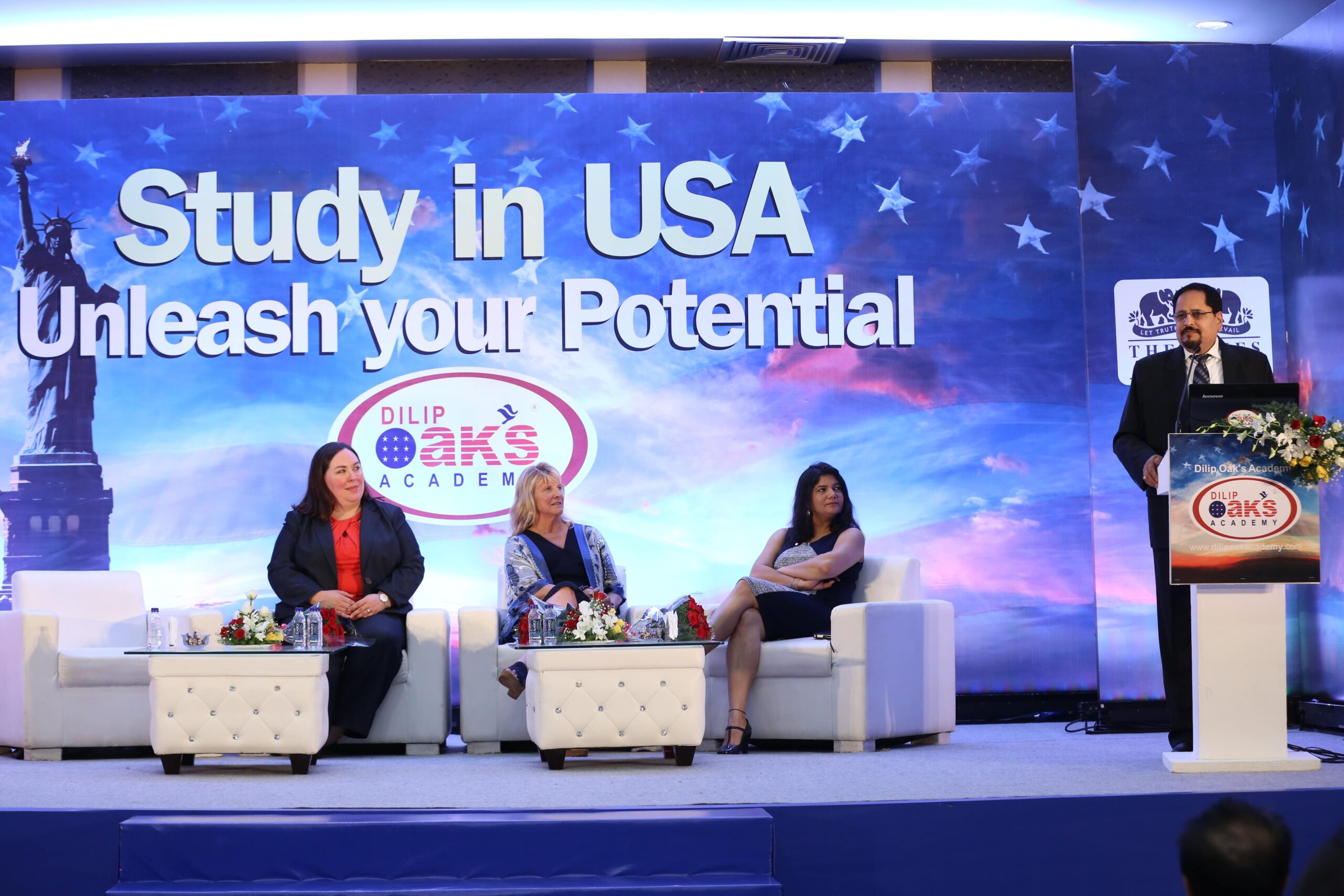
A glimpse of the Fall 2023 Pre-departure Orientation

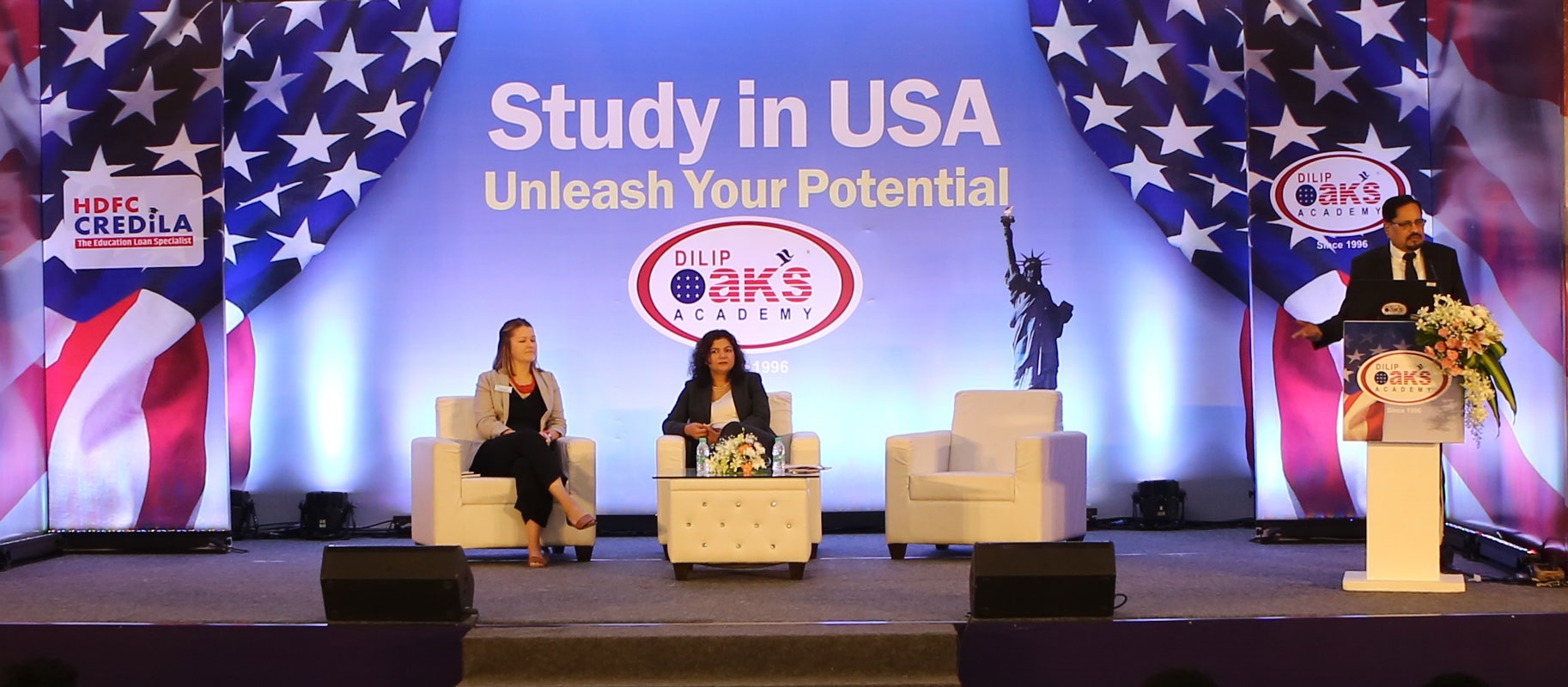
Like every year, Dilip Oak’s Academy, in association with HDFC Credila, conducted the Pre-Departure Orientation for students joining US universities in August 2023 (Fall semester) for bachelor’s and master’s degrees. This event is one of the largest of its kind in India and has been conducted since 1996.

The event was held in two sessions at Siddhi Banquet Hall and was attended by an audience of around 1500, including students and parents. Dr. Jennifer Gruber, Associate Vice-President; Dr. Seema Sehrawat, Chief of Staff, both from California State University Chico and Ms. Sarika Oak, Director (Operations) Udemy, San Francisco, graced the event as chief guests.

Mr. Oak gave crucial information on things to do before traveling to the US, like medical checks, immunization requirements, insurance and foreign exchange regulation.

Mr. Oak explained that the overall unemployment rate in America is all-time low, i.e., 3.6% and the tech unemployment rate is only 2% in May 2023, suggesting that demand for tech professionals remains.

He further added that the U.S. Bureau of Labor Statistics projects that the U.S. will need over 1 million more tech professionals over the next decade. While some large IT companies may have experienced some job losses in recent years, there are still many opportunities for employment in midsize and small IT companies. Moreover, jobs in the non-IT field like engineering, architecture, and finance are not affected at all.

Sarika Oak threw light on campus life, accommodation and security, and important documentation like Social Security Number. She also discussed how to get financial assistance, including campus jobs and job opportunities, after completing the degree. She urged students to be proactive and focus on opportunities that would make them well-rounded, work-ready employees. She emphasized that relationships and networks are important in securing internships and jobs, so students should make friends beyond the Indian community.

Dr. Gruber and Dr. Sehrawat also pointed out that students engage in campus life, make friends beyond the Indian community, and explore student clubs and leadership opportunities. Students should take advantage of the different on-campus employment.

Both students and parents were greatly impressed by the program. Mrs. Geeta Velankar added, “The guidance given was very professional and comprehensive, covering all aspects from settling down in the university, finding housing, and even landing a job. Now, I can rest assured that studying in an American university far away from home will not be a struggle for my child.”

Sameer Bhuvaji said, “Before the orientation, we thought spending such large sums of money on our children’s education was a big gamble. But, Mr. Oak and the university representatives assured us that our children would have good job prospects in America after their studies. So now, we see the money spent on their education as an investment.”

Academy student Sharvari Joshi shared, “I got assistance from the academy regarding the selection of universities, drafting of Statement of Purpose and visa interview. The entire process was seamless, and due to Oak sir’s guidance, I secured admission from the University of Michigan, Ann Arbor, for Mechanical Engineering.

Informative Seminars Receive Overwhelming Response

Along with the Pre-Departure Orientation, the academy conducted two free seminars on Masters’s education in America. Both seminars received great responses from around 1600+ students and parents.

In the master’s seminar, Mr. Oak highlighted the trending specializations for Computer Science, especially Artificial Intelligence, Machine Learning, Cyber Security, Robotics and Data Science. Also, engineering fields like Mechanical, Electrical, Civil and Bio-Medical have very good job opportunities.

At Dilip Oak’s Academy, We provide detailed guidance on these processes under our Admission Counseling Services, including a selection of universities, documentation process and visa counseling, and mock visa interviews. In addition, as India’s leading Study Abroad Consultants, we have helped more than 30,000 students to secure their dream admits for various universities in America including MIT, Stanford, Cornell, Carnegie Mellon and other top-ranked universities.

We also offer GRE, TOEFL, and IELTS coaching, GRE Self Prep and guide students with university selection, application essays, and visa counseling under our Admission Counseling Services for USA, Germany and UK.  To enroll, call us on 91-020-67444222, 91-8007878495

Exploring the Benefits of Curricular Practical Training (CPT) for F-1 Visa Holders

Curricular Practical Training or CPT is a type of work authorization that permits students holding F1 visa to work off-campus in a position directly related to their major or program of study. CPT allows students to engage in internships, cooperative education programs, or other work experiences that are an integral part of their curriculum. CPT can be full-time or part-time, paid or unpaid, and may take place during the academic year or summer breaks. In this blog, we will discuss the details of CPT, and benefits for F1 visa holders.

Consulting with the designated school official (DSO) and following the necessary procedures will help students maximize the advantages of CPT while maintaining their legal status as international students.

Duration of CPT

The duration of Curricular Practical Training (CPT) can vary depending on the program and the academic institution’s guidelines. Generally, CPT can be undertaken on either a part-time or full-time basis. Full-time CPT allows students to work for more than 20 hours every week during official university breaks or vacation periods, while part-time CPT limits students to working not more than 20 hours per week while school is in session. The total duration of CPT typically should not exceed 12 months. However, it is important to note that engaging in full-time CPT for more than 12 month can make students ineligible for Optional Practical Training (OPT), which is another work authorization available to F-1 visa holders after completing their academic program.

Eligibility for CPT

You must have been a lawful full-time student in the United States for one academic year (i.e., two full terms) to qualify for CPT unless your academic program mandates immediate participation for all students. Maintain a valid F-1 visa and a medical coverage.

Advantages of Curricular Practical Training (CPT):

    • Real-World Experience and skill development: CPT provides students with the opportunity to apply their theoretical knowledge in a practical work environment. It allows them to gain hands-on experience, develop practical skills, and understand how concepts learned in the classroom are implemented in real-world scenarios. CPT offers an environment for students to develop and refine a wide range of skills, including communication, teamwork, problem-solving, and time management. These transferable skills are in high demand by employers across various industries.
    • Career Exploration and Development: Engaging in CPT enables students to explore several career paths and industries. It helps them gain insights into their field of study, identify their strengths and interests, and make informed decisions about their future career goals.
    • Financial Support: Curricular Practical Training (CPT) offers F-1 visa holders in the US the advantage of financial support through paid opportunities. By participating in CPT, students can earn income that helps cover their education and living expenses. This financial support reduces the burden of tuition fees, accommodation costs, and everyday expenses. Moreover, it promotes independence and self-sufficiency by allowing students to rely less on external funding sources. The financial stability gained through CPT enables students to focus on their academic pursuits, gain relevant work experience, and fully immerse themselves in the international experience. By adhering to regulations and guidelines, students can benefit from the financial advantages of CPT while maintaining their F-1 visa status.
    • Networking Opportunities: CPT allows students to build professional networks and establish connections within their industry of interest. Through interactions with colleagues, supervisors, and professionals, students can expand their professional contacts, seek mentorship, and potentially secure future job opportunities.
    • Enhanced Employability and Resume Enhancement: Practical work experience gained through CPT can significantly enhance a student’s employability. Employers often value candidates with relevant industry experience, and CPT provides an avenue for students to demonstrate their skills, work ethic, and ability to contribute to the workplace. Having CPT experience can give students a competitive edge in the job market. Including CPT experience on a resume showcases a student’s practical experience and demonstrates their commitment to professional growth. It can make their resume stand out and differentiate them from other job applicants.
    • Cultural and Global Exposure: For international students, CPT provides an opportunity to immerse themselves in the cultural and professional environment of their host country. It exposes them to diverse perspectives, work practices, and cultural norms, contributing to their personal and professional growth.

    At Dilip Oak’s Academy, We also provide detailed guidance on these processes under our Admission Counseling Services, including a selection of universities, documentation process and visa counseling, and mock visa interviews. In addition, as India’s leading Study Abroad Consultants, we have helped more than 30,000 students to secure their dream admits for various universities in America including MIT, Stanford, Cornell, Carnegie Mellon and other top-ranked universities.

    We also offer GRE, TOEFL, and IELTS coaching, GRE Self Prep and guide students with university selection, application essays, and visa counseling under our Admission Counseling Services for USA, Germany and UK.  To enroll, call us on 91-020-67444222, 91-8007878495

    The Optional Practical Training (OPT) Program for International Students in the USA.

    Optional Practical Training (OPT) is a program that allows international students who have completed their degrees in the United States to work in the country for a certain period of time. The duration of the OPT program can vary depending on various factors such as the type of degree, the field of study, and any extensions that may be available. It enables oversees students to work in USA without obtaining H1B visa.

    Benefits of OPT for International Students

    Optional Practical Training (OPT) is an attractive option for overseas students coming to the USA for higher education:

    Gain work experience: OPT allows international students to gain practical work experience in their field of study. This experience can help them stand out when applying for jobs after completing their studies.

    Extend stay in the USA: OPT allows international students to stay in the USA for an additional 12 to 36 months after completing their degree program, depending on their field of study. This can provide an opportunity to gain work experience, and explore different career paths.

    Network and make connections: While working on OPT, international students can network with professionals in their field, which can lead to job offers and career opportunities in the future.

    Financial stability: OPT allows international students to earn money and become financially stable, which can be helpful in paying for their education loan.

    Bridge to H-1B visa: OPT can serve as a bridge to the H-1B visa, which is a non-immigrant visa that allows U.S. employers to temporarily employ foreign workers in specialty occupations. OPT can provide international students with the necessary work experience to qualify for an H-1B visa.

    Duration of OPT

    The standard OPT program allows eligible students to work in the United States for up to 12 months. However, students with degrees in science, technology, engineering, or mathematics (STEM) fields, are eligible for a 24-month extension of their OPT period.

    It’s important to note that the total duration of OPT, including any extensions, cannot exceed 36 months.

    It’s also important to understand that the OPT clock starts ticking the day after a student’s program end date, and any time spent unemployed during the OPT period will count against the total duration. This means that it’s important for students to secure employment as soon as possible after their program end date, and to report any changes in employment or address to their Designated School Official (DSO) within 10 days of the change.

    During their OPT period, international students can request that their employer sponsor them for an H1B visa, which grants them the ability to work in the United States for up to 6 (3+3) years. The US government allocates a total of 65,000 H1B visas every year, with an additional 20,000 visas reserved specifically for STEM students. Applications for H1B visas are accepted on April 1st of every year, with approximately 250,000 applicants competing for these limited slots, resulting in a lottery system to determine visa recipients. If a STEM student is not selected for a visa in the initial round, they can continue working under OPT and apply again the following year, providing them with up to three chances to secure a work permit during their OPT period.

    At Dilip Oak’s Academy, We also provide detailed guidance on these processes under our Admission Counseling Services, including a selection of universities, documentation process and visa counseling, and mock visa interviews. In addition, as India’s leading Study Abroad Consultants, we have helped more than 30,000 students to secure their dream admits for various universities in America including MIT, Stanford, Cornell, Carnegie Mellon and other top-ranked universities.

    We also offer GRE, TOEFL, and IELTS coaching, GRE Self Prep and guide students with university selection, application essays, and visa counseling under our Admission Counseling Services for USA, Germany and UK.  To enroll, call us on 91-020-67444222, 91-8007878495.

    What is behind the increasing popularity of GRE among Indian students?

    There has been a rising tide of Indian students going to the United States for higher-studies in recent years. The GRE is an entrance test that assesses proficiency in math, reading, and writing. It is required for admission to most postgraduate programs and doctoral programmes in the US and is also accepted by higher education institutions in the UK, Canada, Australia, and Ireland. The GRE provides universities with a common benchmark against which to compare applicants from around the world.

    The increase in the number of Indian students taking the GRE is a significant development in the higher education landscape. Nearly 1,25,000 student visas were issued to Indians to study in the United States in 2022. This indicates a growing trend of Indian students opting for postgraduate education in the US and other countries.

    Doubling of Indian Students Taking the GRE: A Significant Development

    The number of Indian students taking the Graduate Record Examination (GRE) has doubled in the past decade to 1,14,000 which is just 10,000 examinees less than the number of test-takers in the United States.

    The Educational Testing Services (ETS), a US-based organization, administers the GRE test. The organization has witnessed a 48% rise in the number of Indian test takers in the 2021-2022 academic year, with the number of examinees increasing from 68,869 to 1,02,024. This growth in GRE statistics in India has been attributed to the increasing number of Indian students opting for higher education in the US.

    Hyderabad has topped the table in the number of students taking the GRE with a record 25,347 candidates. Mumbai had 5,759 candidates in 2021-22; Bangalore 5,564; Pune 3,689; Chennai 3,278; Delhi 2,845. Also, many second-tier cities are coming up. Guntur has witnessed rapid growth and the number of candidates for 2021-22 has increased to 8,983. Other Tier 2 cities like Visakhapatnam, Warangal and Nellore also performed well last year. The same can be said for many Tier 3 cities. For example, Khammam city entered the top ten following a 150% rise in the number of examinees, from 888 in 2015-16 to 2,221 in 2021-22.

    Reasons for Indian Students Choosing US Universities

    There are several reasons that attract Indian students to education in USA. Firstly, the US is home to some of the world’s best universities, offering high-quality education and research opportunities. Many Indian students see this as an excellent opportunity to gain a world-class education that will increase their job prospects and help them stand out in a competitive job market.

    The US offers a diverse range of academic programs, giving Indian students a wide range of options to choose from. This includes courses in fields like engineering, business, technology, and the arts, among others. Also, the US offers a welcoming and inclusive environment for international students. Many universities in the US have dedicated international student support services to help students adjust to life in a new country and provide guidance on academic and personal matters.

    Many universities in the US offer financial aid and scholarships to international students. This support can help alleviate the financial burden of studying abroad and make it more affordable for Indian students to pursue higher education in the US. Lastly, the US offers opportunities for practical experience through internships and co-op programs, which can help Indian students gain valuable work experience and develop their professional skills.

    The GRE: An Essential Component of the Application Process for Indian Students

    India’s rapid growth in GRE statistics is in stark contrast to recent trends in the US. In the US, universities are increasingly challenging the importance of standardized assessments like the GRE. However, in India, the GRE has become a critical component of the application process for admission to postgraduate programs. This growth in GRE statistics in India also makes a stark contrast against China, which has only witnessed a 20% increase in the number of test takers in the last decade. In the 2021-2022 academic year, only 50,758 Chinese students took the GRE exam, which is less than half the 1,14,000 of Indian test-takers.

    At Dilip Oak’s Academy, we offer GRE, TOEFL, and IELTS coaching, GRE Self Prep and guide students with university selection, application essays, and visa counseling under our Admission Counseling Services for USA, Germany and UK. 

    We also provide detailed guidance on these processes under our Admission Counseling Services, including a selection of universities, documentation process and visa counseling, and mock visa interviews. In addition, as India’s leading Study Abroad Consultants, we have helped more than 30,000 students to secure their dream admits for various universities in America including MIT, Stanford, Cornell, Carnegie Mellon and other top-ranked universities. To enroll, call us on 91-020-67444222, 91-8007878495.

    Master of Architecture (M. Arch) Education in the USA: A Comprehensive Guide


    Pursuing a Master of Architecture (M. Arch) degree in the USA is an excellent way to advance your knowledge and skills in the field of architecture. The USA has some of the best architecture schools in the world, offering high-quality education, cutting-edge research opportunities, and access to top-notch facilities and resources. If you are considering pursuing an M. Arch education in the USA, this blog will provide an overview of the M. Arch program in the United States, covering its structure, admissions requirements, and potential employment outcomes.

    Masters in Architecture is offered as M. Arch, Masters of Science (M.S) or Masters of Arts (M.A) in US universities. As one can expect, an M.S in Architecture degree offers a more research and technology-oriented focus while M.A in Architecture degrees are more art-focused and generally specialize in design. The Master of Science (MS) in Architecture and Master of Arts (MA) in Architecture programs are typically research-oriented degrees that provide students with a theoretical understanding of architecture. On the other hand, the Master of Architecture (M. Arch) degree is a professional degree that prepares students to become licensed architects.

    Fortunately, a master’s degree in architecture in the United States is considered a STEM degree (Science-Technology-Engineering-Mathematics). STEM degrees allows you to work on OPT (optional practical training) for 36 months after graduation. (compared to the 12-month OPT period allowed to other graduates)

    M. Arch Program Overview

    M. Arch programs in the USA are designed to provide students with advanced knowledge and skills in architecture and related fields. These programs typically take two to three years to complete and offer a comprehensive curriculum that includes both theory and practical coursework. The curriculum covers a wide range of subjects, including architectural design, history, theory, building technology, sustainability, and professional practice. In addition to coursework, students are required to complete a design studio project, which allows them to apply their theoretical knowledge to real-world design problems.

    Master of Architecture (M. Arch) degree programs in the United States offer various specializations. Some of the most common specializations offered in M. Arch programs in the USA are:

    • Sustainable Design and Green Building
    • Urban Design and Planning
    • Interior Design
    • Landscape Architecture
    • Digital Technologies in Architecture
    • Building Information Modeling (BIM)
    • Construction Management
    • Real Estate Development and Design

    These specializations enable students to focus on a specific area of interest within the field of architecture and develop their skills and knowledge in that area.

    Requirements for Admission

    Students will need the following: 

    • A bachelor’s degree in architecture or a related design field is required.
    • Most universities require a GRE test scores.
    • A resume or CV is required.
    • Proof of English language proficiency in the form of IELTS or TOEFL test results.
    • A SOP, or Statement of Purpose, is required for universities.
    • LOR or Letter of Recommendation, depending on the institution.
    • Portfolio: A portfolio of your design work is usually required. This should showcase your creative and technical abilities and may include drawings, sketches, models, photographs, and other relevant materials.

    Career Prospects

    To become a licensed architect in the USA, you typically need to earn a professional degree in architecture from a program that is accredited by the National Architectural Accrediting Board (NAAB). The most common degree is the Master of Architecture (M. Arch), but some states may also accept a Bachelor of Architecture (B. Arch) degree.

    M. Arch graduates in the USA have a variety of career options in the field of architecture. Many graduates choose to work as licensed architects in architectural firms, where they may be involved in designing and overseeing the construction of buildings and other structures. Others may work in related fields, such as urban planning or interior design. Additionally, some graduates may choose to pursue careers as Project managers, design architects, senior project architects, landscape architects, urban designers and urban planners. There are job opportunities in a variety of private industries, including design, construction, urban development, and infrastructure.

    The annual income of M. Arch graduates in the USA can vary depending on experience, geographic location, and the specific industry or sector they work in. According to the United States Bureau of Labor Statistics (BLS), the median annual wage for architects, including those with M. Arch degrees, was $82,320 as of May 2020. salaries ranging from $49,790 to $139,120.

    Jobs for trained architects will continue to grow in the United States, with steady demand from corporations and planning organizations. Bureau of Labor Statistics predicts an 8.4% increase in employment for architects between 2018 and 2028. The United States is a top choice for architecture students due to its globally acclaimed universities, engaging curriculum, emerging technologies and design trends, and readily available employment opportunities.

    Conclusion

    Overall, pursuing an M. Arch degree in the USA can be a rewarding and fulfilling experience for those interested in the field of architecture. The programs provide students with a strong foundation in the theoretical and technical aspects of the discipline, as well as opportunities for hands-on design experience and exposure to real-world contexts. If you’re considering an M. Arch degree, be sure to research the various programs available and their specific admission requirements to find the best fit for your academic background and career goals.


    Want to pursue a Master’s of Finance Degree in the USA?

    Do you want to further your education in the field of finance? Do you dream of attending a U.S. university for your Master of Science in Finance? Read on to find out how you can study abroad to build a successful career in finance.

    A master’s degree in finance in the United States is considered a STEM degree (Science-Technology-Engineering-Mathematics). STEM degrees allow students to work on OPT (optional practical training) for a period of 36 months post-graduation. (as compared to the 12-month OPT period granted to non-STEM graduates on a student visa)

    Finance is the bedrock of all commercial activity. In today’s dynamic global economy, a strong financial team is essential for every company. This has created a worldwide demand for highly skilled and educated financial specialists. Those with a Master’s Degree in Finance from the US are considered highly valuable employees for any financial institution, whether they work in banking, financial research, or investments. The latest Occupational Outlook Handbook from the U.S. Bureau of Labor Statistics projects a 6% increase from 2021 to 2031 in jobs related to Finance. Despite the competitive employment market, especially for international students, the United States is a great place for finance majors to launch their careers.

    Overview: MS in Finance

    The Master of Science in Finance is also known as Masters of Finance degree in some universities. The course is offered from 10 to 24 months, depending on the university. This course is offered in around 50 universities across the United States. Study of the principles, processes, and practices of investment analysis, portfolio management, corporate finance, financial risk management, quantitative methods, financial data analytics, and valuation are some of the core subjects covered in a typical US Master’s of Finance program. Financial Engineering, Real Estate Finance, Hedge Funds, Mergers & Acquisitions, Fixed Income Securities, and many more electives are available to students. Graduates will be equipped to take on leadership roles in a wide range of finance-related fields, including but not limited to: corporate finance, financial institutions, investment banking, risk management, capital markets, financial modeling, behavioral finance, econometrics, investment management, and more.

    Advantages of pursuing MS in Finance

    • It’s a more practical and efficient way for students to become financial experts in a short amount of time.
    • Unlike an MBA, a Master of Science in Finance focuses primarily on financial planning and risk management and does not typically require work experience for admissions.
    • Following is a list of high paying jobs available to graduates with an advanced Finance degree :
    1.  Investment banking
    2. Hedge fund management
    3. Financial Analysis
    4. Information technology auditor
    5. Financial software developer
    6. Private equity associate
    7. Chief compliance officer
    8. Chief financial officer

    The average salary starts at more than $75000 per year and can range up to as high as $125000+ per year

    Admission Requirements for MS in Finance

    Prospective students with a bachelor’s degree in finance or a quantitative subject will have a better understanding of the subject. As a result, candidates with a good bachelor’s degree in finance, accounting, engineering, mathematics, science, business economics, or a related quantitative field are ideal for the MS in Finance program. A typical MS in Finance program does not require work experience; however, applicants with some industry experience (ideally 12-15 months) are encouraged. Applicants possessing a CFA Degree (Chartered Financial Analyst) have an added advantage for getting admitted into high ranked US universities. Some universities also require applicants to submit their GRE scores. Candidates must also demonstrate strong academic potential, with a decent GPA.

    To meet the English language requirements, international students are required to take the TOEFL or IELTS test. In addition to the aforementioned requirements, many programs require applicants to complete pre-requisite courses in calculus, statistics, business finance, accounting, investments, micro and macroeconomics, and other related subjects before enrolling. Those with undergraduate degrees in finance will have most likely completed these courses during their undergraduate degree term; however, those with time constraints should check with universities, as many offer pre-requisite programs that can be accessed and completed online.

    At Dilip Oak’s Academy, we provide detailed guidance on these processes under our Admission Counseling Services, including a selection of universities, documentation process and visa counseling, and mock visa interviews. In addition, as India’s leading Study Abroad Consultants, we have helped more than 30,000 students to secure their dream admits for various universities in America including MIT, Stanford, Cornell, Carnegie Mellon and other top-ranked universities.
    We also offer GRE, TOEFL, and IELTS coaching, GRE Self Prep and guide students with university selection, application essays, and visa counseling under our Admission Counseling Services for USA, Germany and UK. To enroll, call us on 91-020-67444222, 91-8007878495.

    F1 Visa: Basics and application process

    The United States administration offers a variety of non-immigrant visas for foreign nationals. For instance, the United States issues B-1/B-2 visa to visitors and businessmen, and H-1B visas to those who have been granted permission to work in the country. An M-1 visa is issued to students enrolling in short-term vocational programs like flight schools, language institutes, etc. However, students going to an accredited university for a full-time academic program, require an F-1 visa stamp.

    Currently, student visas are being processed faster than other types. Those who already hold a B1/B2 visa can obtain a visa by appearing for VFS appointment and by submitting their application via drop box. In other words, they get an interview exemption.
    Students are allowed to apply for the F-1 visa 365 days before the start date of the program mentioned on their I-20 form. The I-20 form is an official document issued by the United States Citizenship and Immigration Services (USCIS). The following important details are mentioned in the document:

    • the name as printed on the passport of the student
    • the name of the university which the student is joining
    • the program to which the student has been admitted
    • the date of commencement of the program
    • the date by which the program has to be completed
    • the total cost of education for one year.

    The fall 2023 semester generally begins in the third week of August. So, if you plan to attend an American university this fall, you can begin applying for your visa now.

    How to Apply for an F1 Visa?

    • Get your I-20 from the SEVP institution
    • Apply online by filling the DS-160 form
    • Pay the general visa application fee ($160)
    • Pay the SEVIS fee ($350)
    • Schedule your OFC appointment followed by F1 visa interview date
    • Attend the F1 visa interview on the scheduled date

    Keep in mind that you should have adequate liquid funds to cover the total cost of one year of education – this is mentioned in the I-20 form. Many students are under the wrong impression that their sponsor needs to deposit this entire amount in the bank and that otherwise their visa can be rejected. Contrary to popular belief, this is not the case. Bank deposits (savings, fixed deposits) and other liquid assets like shares, mutual funds, Public provident fund and employee provident fund etc. education loans are all acceptable forms to prove financial capability. The following are additional points are also taken into consideration by the consulate officer:

    • Accreditation and reputation of the university to which you have been admitted (this shouldn’t be an issue if you go through Dilip Oak’s academy; we only recommend accredited universities)
    • your academic background is good along with a satisfactory GRE score
    • Annual income and financial stability of your sponsor
    • Your communication skills along with your ability to give convincing and honest answers to the consulate officer’s questions

    If your Visa Application gets rejected in the first attempt, you can apply again. You have to go through the same process again, except the SEVIS fee.
    Start preparing your financial documents now and apply for an F-1 visa as soon as you get your I-20 form from the university you desire to attend. 

    At Dilip Oak’s Academy, we provide detailed guidance on these processes under our Admission Counseling Services  that include, selection of universities, documentation process and visa counselling along with mock visa interviews. As India’s leading Study Abroad Consultants, we have helped more than 30,000 students to secure their dream-admits for various universities in America including MIT, Stanford, Cornell, Carnegie Mellon and other top-ranked universities.
    We also offer GRE, TOEFL, and IELTS coaching, GRE Self Prep and guide students with university selection, application essays, and visa counseling under our Admission Counseling Services for USA, Germany and UK. To enroll, call us on 91-020-67444222, 91-8007878495.

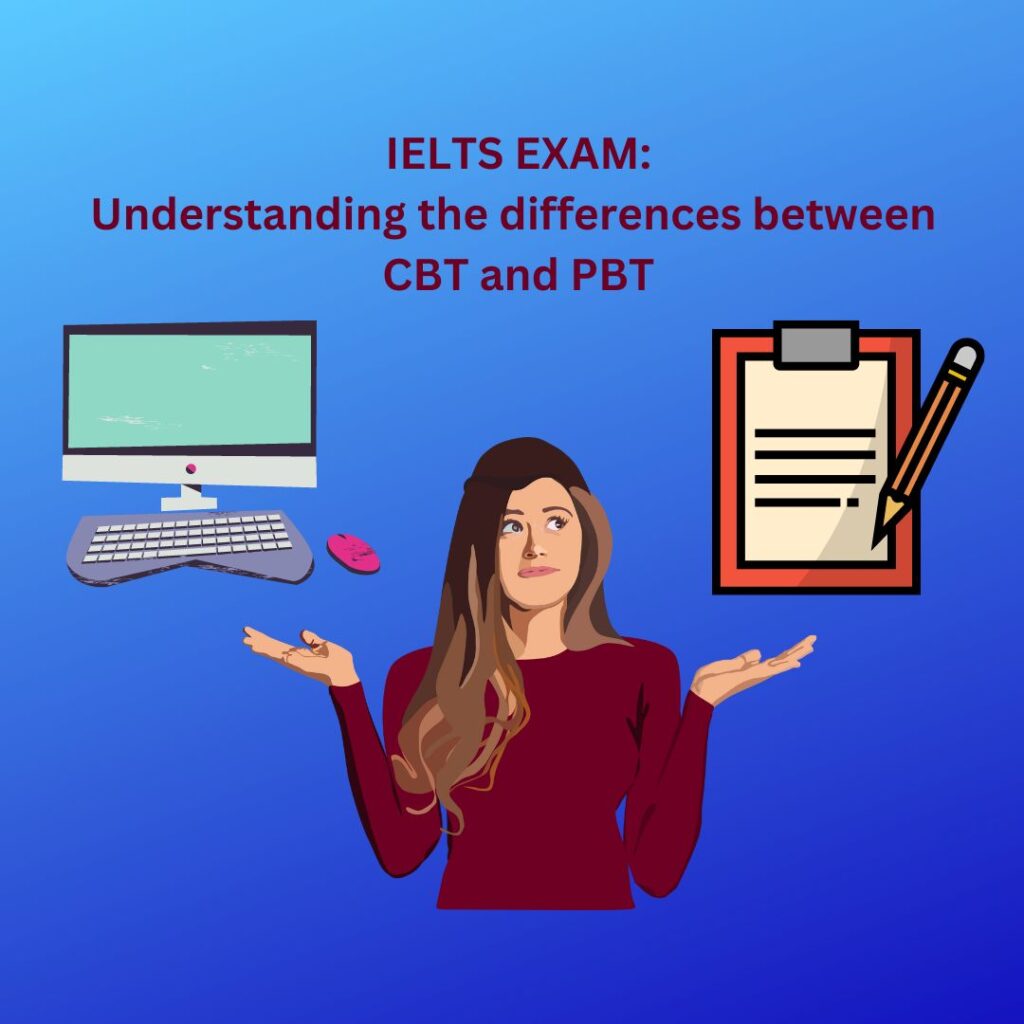
    Should I take a Computer-based or a Pen-Paper-based IELTS?

    Understanding IELTS Test Formats

    The International English Language Testing System is an English language proficiency test one has to take if one wants to study, work or immigrate to English-speaking countries. For a long time, IELTS was a paper-based test. However, recently, IELTS offered students a choice of taking the test in computer-based mode [CBT] or paper-based mode [PBT]. Choosing the suitable mode of examination is no mean feat here!

    Comparing CBT and PBT

    The test format is the same, you get the same sections, the same question types, the same difficulty level, and the same time per section with the same evaluation and marking scheme. The Speaking section is conducted face-to-face, and often on different dates. It is the SAME for both PBT and CBT. The main differences between CBT and PBT can be seen in the Listening, Reading, and Writing modules, which are discussed in detail below:

    Modules

          Pen-Paper based 

            Computer-based

    Listening

    • At the end of the listening section, you get 10 minutes to transfer your answers from the question booklet to the answer sheet.
    • You have to write down answers on the answer sheet using a pen/pencil.
    • In the end, you only get 2 minutes to review your answers.
    • Some questions need you to type your answers in the text box, others need you to drag words from one place to another, and others require you to select boxes.

    Reading 

    • You need to flip the pages back and forth to locate answers which can be time-consuming.
    • You can underline specific sentences or words you might want to return to using a pen or pencil.
    • When writing your answers in the answer sheet, you have to ensure that you check for spelling or grammatical mistakes
    • Those with problems reading small font sizes might find the paper-based test a little challenging
    • You can see the passage in the left panel as you continue answering questions in the right panel.
    • You can highlight any part of the text you want by selecting the text, right-clicking on it and choosing ‘highlight’.
    • You can copy-paste from the text using CTRL+C and CTRL+V which reduces the chances of spelling errors. 
    • You can increase the font size, so you do not need to strain to read.

    Writing 

    • You have to write the essay/report/letter with a pen or pencil. So, if you are one of those who finds writing on paper more challenging than typing, you might prefer to choose CBT.
    • You need to count the words by yourself.
    • You can write the essay with a pencil to proofread later by using an eraser which consumes some time.
    • You need to have legible handwriting. If a word is difficult to read, it is likely to be marked as a spelling error.
    • Your typing speed must be adequate.
    • You can see the word count at the bottom of the screen
    • You can easily cut, copy and paste an entire sentence. You are also provided with a pen and paper to plan your essay.
    • You do not have to worry about your handwriting.

    Speaking 

                        Same

                    Same

    Click here to read more blogs about IELTS. You can also visit our sections on GRE and Admission Counseling.

    Other differences between CBT and PBT

    Pen-Paper based

    Computer-based

    4 slots in a month

    90 slots in a month 

    Results in 12-13 days

    Results in 3-5 days 

    Test centers are less crowded

    Test centers may be more crowded

    Noise because of typing during the writing section can get distracting

    Factors to Consider When Choosing Between CBT and PBT

    While choosing the most appropriate mode of the exam, we recommend that you keep in mind your application deadlines. In addition, find out your comfort level by checking the sample of the CD-IELTS on the IDP website to know the Page Look and feel of the CBT exam. Similarly, you can try out a paper-based test to eventually decide which mode to choose.

    As India’s leading Study Abroad Consultant, Dilip Oak’s Academy offers a comprehensive suite of services, including GRE, TOEFL, and IELTS coaching, as well as GRE Self Prep. Furthermore, our admission counseling services can guide you through the entire process from Shortlisting Universities to Visa Counseling. With our expertise, we have successfully sent 32,000 students to various prestigious American universities like MIT, Stanford, Cornell, and Carnegie Mellon. To enroll in our comprehensive overseas education consultancy services, book a free consultation or call us at 91-20-67444222.

    MS in Spring 2024? Here’s what you need to know! 

    MS in Spring 2024? Here’s what you need to know! 

    If you are planning for the January 2024 intake, this blog will help you plan systematically to fulfill your dream of MS in the US. 

    Before we get into the details, for those of you who are still on the fence about applying for the upcoming Spring semester because of the misinformation available online, the section below will allow you to confidently make your decision.

    Should I Apply for the Spring Semester?

     Some common misconceptions: 

    • Spring enrolment is lower at most schools. Not really! Nearly all colleges and universities in the United States accept new students for the spring semester. The only caveat is that some universities only offer certain classes in the fall semester, so new students who enroll in the spring miss out. 

    • Financial aid is scarce. Again, this is not correct. Financial aid opportunities in the spring are comparable to those in the fall. Also, most universities only give financial aid to students who have already completed one semester with a very good GPA in the form of Research and Teaching Assistantships, tuition waivers, etc. (Grade Point Average). Accordingly, it makes little difference whether you enroll in the fall or spring semester.

    Now that you are better informed, the timeline mentioned below will help you plan your entire application process.

    What is the Best Time to Apply for the Spring Semester?

    The optimal time to submit an application for the spring semester is between June and July of the preceding year. While many schools continue to accept applications through September, ensure that you confirm your specific program deadlines. 

    Step by step guide to spring 2024 applications 

    Here is the application schedule for the upcoming spring semester. The following instructions are universal and should be followed by all students applying for the spring intake. There’s no time to waste now, so hurry up and get to work.

    February – March 2023 

    1. Review your goals for MS education and choose some specific areas in which you would like to specialize
    2. Register for the GRE and TOEFL/IELTS examinations – these examinations should preferably be taken by mid-June in order to have time to complete all of your online applications and courier the required documents by the end of July.
    3. Start preparing for GRE and TOEFL/IELTS, as it will take approximately 2-3 months to achieve your target score. 

    April – May 2023

    1. Make a preliminary list of about 30 universities that meet your requirements considering:
      • Location
      • Costs
      • Broad specializations you are interested in
      • Recommendations by seniors your professors etc.
      • Whether your academic profile fits the university’s requirements.
    2. Arrange for 4 -5 sets of transcripts in sealed covers from your college or university – some universities insist on university transcripts
    3. Choose your recommenders (generally, 3 recommendations are required, at least one of which should be from the educational institute last attended) and give them the necessary details – resume, copies of your mark sheets etc.
    4. Start working on your Statement of Purpose (target date for completion 31 May 2023) and Resume

    June-July 2023

    1. Take the GRE and TOEFL/IELTS exams latest by 20 July
    2. Carry out a comprehensive review of the 30 universities considering:
      • Your academic performance in the bachelor’s degree
      • GRE and TOEFL/IELTS scores of students admitted in the past
      • Any minimum cut-offs with respect to GRE and TOEFL/IELTS scores
      • Whether courses of your choice are offered in the spring semester
      • Cost of education
      • Complete your Statement of Purpose (SOP) and Resume
    3. Make your final shortlist of 8-10 universities.
    4. Request the ETS to forward your GRE and TOEFL scores (IDP for IELTS scores) to the universities you are applying to, specifying the correct codes for the universities/departments you are applying to.
    5. Complete the online application process and send the required documents by courier 

    This completes the application process; however, there are further steps to be taken:

    1. Track the status of your application on your status page of the university’s website. Though universities generally communicate decisions or requirements by either e-mail or post, it may happen that the only source of information is your status page.
    2. If there are any deficiencies in your applications (missing documents, non-receipt of GRE or TOEFL/IELTS scores, recommendations etc.), act immediately to correct the deficiencies.
    3. When you receive an offer letter from the universities (or when an admission decision is indicated on your status page), email your acceptance. This is very important, especially when you are offered funding.
    4. When you have accepted the university’s offer of admission and the documentation formalities are complete, the university will send you the 1-20, an immigration document, which is essential for obtaining a visa.
    5. When you receive the I-20, check that it is correct in all respects:
      • Your name and date of birth should be exactly as in your passport
      • Your course and course duration are correctly specified
      • The financial sources indicated exceed the costs.
    6. Prepare the visa documentation
    7. Study the visa application formalities specified on the websites of the applicable US Consulate and the VFS (Visa Facilitation Services)
    8. Apply for a visa interview date – you can apply for a visa interview 120 days before the joining date mentioned on your I-20.

    As India’s leading Study Abroad Consultants, we offer GRE, TOEFL, and IELTS coaching, GRE Self Prep and guide students with university selection, application essays, and visa counseling under our Admission Counseling Services for USA, Germany and UK. 

    Contact us at 020-67444222 or email us at support@dilipoakacademy.com.