The Difference Between Co- and Extra-curricular Activities and Why They are Important!

For those of you who want to pursue higher studies abroad, it is time to start brainstorming about your admission essays. And, though they may seem insignificant, important aspects that need to be covered in both these documents are your co-curricular and extra-curricular activities.

Especially for those of you applying for undergraduate programs, i.e. your bachelor’s, the co-curricular and extra-curricular activities carry equal weight along with your academic and SAT score. For the master’s program, your co-curricular activities will set you apart.
While “co-curricular activities” refer to those activities that go together with your academics in school or college, an extra-curricular activity is any activity you take part in that does not involve your academics.

Here are a few examples of co-curricular activities you can highlight in your application

Undergraduate Applicants (BS/BA): school Headboy/girl, class prefect, House Captain, college newsletters, science clubs and projects, inter-class and inter-school competitions and state/national level competitions, elocution, etc.

Graduate Applicants (MS): technical quizzes during college fests, Robocon, SAE BAJA, filing for patents, articles contributed for academic publication, state/national level technical competitions.

A few examples of extra-curricular activities: sports, athletics, debate, dramatics, learning foreign language, arts, chess and book clubs, Rotary/Rotaract, Lions/Leo club or AIESEC memberships, Boy Scout or Girl Guides, volunteer work (blood donation, tree plantation, old age homes, underprivileged children, etc.), painting or dancing, National Cadet Corps (NCC), National Sports Organisation (NSO), National Service Scheme (NSS).

If they are “extra-curricular”, why do colleges and universities care about these activities?
Colleges and universities like students who take efforts to develop their talents and passions. They want students who interact well with others and add something to the community. There is more to college life, particularly in the US than just attending classes. US colleges and universities appreciate students who will go the extra mile by taking initiative and participating in academic as well as social activities on campus.

Which are the activities to highlight and how to describe them?

Before you decide to include co-curricular or extra-curricular activities in your SoP or essay, consider the following questions:
1. Did you actively participate in the activity: provide specific details of the role you played in the activity.
2. Did you engage in this activity for a significant number of years: give specific numbers to give the admissions committee a clear idea of your dedication towards the activity.
3. Were you specifically chosen for any activity: list events, competitions, or showcases that you were selected for based on your expertise in the field.
4. Did you take initiative: state your experience as a leader or mentor and discuss what impact you had on others.
5. Did you make positive changes to the activity: describe the work you did to expand and improve any clubs or events that you were a part of.
6. Did the activity change you in a positive manner: illustrate the changes the activity brought about in you such as deciding to be a part of the debate team to get over your fear of public speaking.

Now, that you have this information, make sure that you focus on the co-curricular and extra-curricular activities when you draft your admission essays. Remember, it is never too late to start participating in activities and events that can highlight your skills and abilities to make your profile diverse and well rounded.
Oak’s Online GRE® Prep Tools

As the GRE® test is computer-delivered; the test-taker has to be comfortable with solving questions on the screen. After years of appearing for paper-based tests, this may be a little daunting for the average college student in India. One of the best ways to boost your confidence on the test day is to get used to the computer-based delivery of the GRE® test.

Dilip Oak’s Academy offers an online suite of practice modules and tests. This online suite will help you prepare on the go! The suite includes Focused Practice, Test Prep, Mock Tests, and Vocabulary App and has hundreds of GRE-like questions for both the Verbal Reasoning and Quantitative Reasoning sections. A single sign-in will be your key to unlocking all the online features.

FOCUSED PRACTICE

(Available for our GRE® coaching students only)

  1. Reinforcement of the classroom coaching by helping you keep in sync with the concepts, tricks, and tips taught in the class
  2. 400+ questions for Verbal and Quantitative Reasoning
  3. Topic-wise questions for Quantitative and Verbal Reasoning


STUDY PLANS

(Available for our GRE® coaching students only)

  1. Carefully designed according to your GRE® test date
  2. Wide variety of plans — one month to four months
  3. Sent directly to your inbox: a detailed preparation method with built-in milestones to help measure your progress
  4. Regular reminders to help you prepare for the GRE® test in a more systematic manner


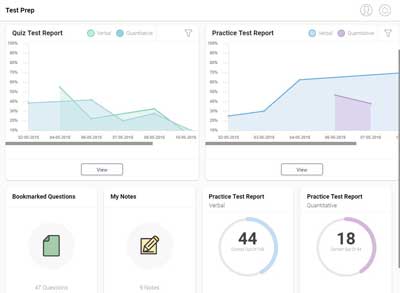
TEST PREPOaks Test Prep

  1. Personalized Dashboard to track your progress
  2. Customized according to the question types and difficulty level
  3. Convenient timed and untimed modes for practice
  4. Instant Review and question summary
  5. In-depth explanatory answers to gauge where you stand


Oaks GRE TestMOCK TESTS

  1. Actual GRE® test experience with full-length timed tests according to the ETS® pattern
  2. Analytical Writing section: Get essay scores and personalized feedback by our experienced evaluators
  3. Detailed Analysis: question by question break up of your performance to help you gauge your strengths and weaknesses
  4. Explanatory Review: help you understand what went wrong and how to get it right the next time

 View our Plans & Pricing for Oak’s Online GRE Prep Tools


VOCABULARY APPOaks Vocabulary App

  1. 1500 high-frequency GRE® words
  2. Images illustrating the meaning of words
  3. Sample sentences, and audio and text pronunciation
  4. An interactive audio-visual tool with test mode

You can buy the Vocabulary App from Google Play or App Store

Free Seminar: Opportunities for Bachelor’s Degree in USA

Attend free seminar by Mr. Dilip Oak on Opportunities for Bachelor’s Degree in USA

Open to students from all streams (Std. X and above)

Parents are strongly encouraged to attend

Click HERE to register

free-seminarSeminar Highlights

  • Why US is the best destination for Undergraduate studies
    •     Comprehensive syllabus and dynamic curriculum
    •     Flexibility in choosing inter-disciplinary courses
  • Cost of education starting at 50 lakhs for 4-year program (financial aid and scholarship available)
  • Cracking the pre-requisite examinations: SAT and TOEFL
  • Student-life and extracurricular opportunities in the USA
  • Employment opportunities after graduation 

 Information on UG opportunities in Canada to be shared as well

 Speaker: Dilip Oak (Founder & Director, Dilip Oak’s Academy)

  • A recognized expert on higher education in USA, Canada and Germany since 1996
  • Trusted counselor for university admission and the visa process
  • 30,000 of his students have secured Masters admission to American universities

Event Chief Guests

Dr. Melody Stapleton (Dean)
Dr. Seema Sehrawat (Associate Dean)
College of Computer Science & Const. Mgmt.
California State University, Chico
Margaret Wolford
(International Graduate Recruiter)
School of Engineering and Applied Science
State University of New York, Binghamton

Sunday, 23rd June 2019

10:00 am

Siddhi Banquet Hall

Opp. Siddhi Garden, D.P. Road, Near Mhatre Bridge, Pune 411004

 REGISTRATION COMPULSORY

Click HERE to register


Fall 2019 Pre-Departure Orientation

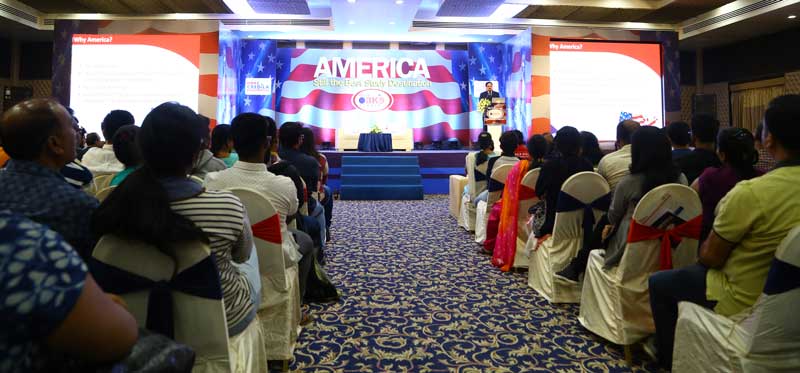
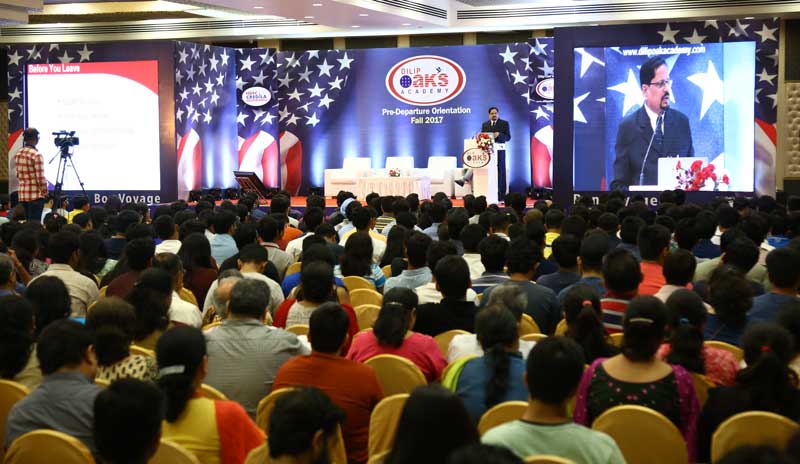
For all students joining American and Canadian universities in Fall 2019 – Don’t miss Dilip Oak’s yearly Pre-Departure Orientation! Here’s your chance to clear all your doubts, gain insights on student-life in the US and meet other students joining the same university.

Pre-Departure-2019


23 June 2019

Siddhi Banquet Hall
DP Road, Near Mhatre Bridge, Erandwane, Pune 411004

This session open to all students joining US and Canadian universities for Fall 2019
Parents are strongly advised to attend


Pack well and get to know about student-life in the USA at our insightful orientation session. Conducted by Mr. Dilip Oak himself, this session will clear all your doubts regarding:

  • Pre-Departure: Forex Regulations, Medical Checks and Immunization, Insurance and Port of Entry Procedure
  • Life in the US: Campus Tips, Accommodation and Jobs after MS

Receive a free copy of “Get Set Go”, a guide on studying in the USA by Mr. Dilip Oak

Further, make joint travel plans and secure shared accommodation with other students joining the same university!

Event Chief Guests

  • Melody Stapleton (Dean) and Dr. Seema Sehrawat (Associate Dean)
    College of Computer Science and Construction Management
    California State University, Chico
  • Margaret Wolford (International Graduate Recruiter)
    School of Engineering and Applied Science
    State University of New York, Binghamton

Session Timings

As the capacity of the venue is only 1,400 pax, we have split the program into two groups based on alphabetical order. Find details of which session to attend below:

Group 1 (Timing: 3:30 pm to 5:30 pm)

Students joining universities with names ranging from A to R (e.g. Arizona State University, Rochester Institute of Technology, etc.) and those ranging from Sa to So (e.g. San Diego State University, Southern Methodist University).

Group 2 (Timing: 6:30 pm to 8:30 pm)
Students joining universities with names ranging from T to Z (e.g. Texas Tech University, University of XXXX) and those ranging from St to Sy (e.g. State University of New York – Buffalo, Syracuse University).

 Please note that California State University will fall under the letter ‘C’ and the University of California will fall under the letter ‘U’. Similarly, Florida State University will fall under the letter ‘F’ and the University of Florida will fall under the letter ‘U’.

–> Refer to the session-wise university list at the end of this page to confirm the slot relevant to you <–

Who Can Attend?
This seminar is open to all students (and their parents) joining American and Canadian universities in Fall ’19.

Entry-Passes for the Event
Students are expected to collect entry passes for themselves and their parents from the Academy. A maximum of two passes for parents will be issued.

Collect passes for event at the Academy between 9:00 am to 6:00 pm from

Monday, 20th May 2019
to
Saturday, 22nd June 2019

If you are unable to collect the entry pass before 22nd June, click HERE to fill up the required form and carry the same along with you on the day of the orientation at least 45 minutes before the program

 Prerequisites to Obtain the Entry Pass

  • Admission Centre and Visa Counseling Students
    Produce your Academy I-card (compulsory) and a photocopy of the I-20 form.


  • All Other Fall 2019 Students
    Produce a photocopy of the I-20 form, or
    stamped F1 visa, or
    the admission letter from the university (in case you have not received the I-20 form/visa).

See you there!

 Session-wise University List

3:30 pm Session 6:30 pm Session
Arizona State University State University of New York Institute of Technology, Utica
Boston University State University of New York, Albany
California State University, Chico State University of New York, Binghamton
California State University, East Bay State University of New York, Buffalo
California State University, Fullerton State University of New York, Stony Brook
California State University, Long Beach Stevens Institute of Technology
California State University, Los Angeles Syracuse University
California State University, Northridge Tennessee Technological University
California State University, Sacramento Texas A & M University, College Station
California State University, San Bernardino Texas A & M University, Kingsville
Campbell School of Pharmacy, North Carolina Texas State University
Carnegie Mellon University Texas Technological University
Clemson University University of Alabama, Huntsville
Cleveland State University University of Baltimore
College of Staten Island, New York University of Bridgeport
Colorado State University University of California, Davis
Columbia University University of California, Irvine
Cornell University University of California, Los Angeles
DePaul University University of California, San Diego
Florida International University University of California, Santa Cruz
Florida State University University of Central Florida
George Washington University University of Cincinnati
Georgia Institute of Technology University of Colorado, Boulder
Grand Valley State University University of Colorado, Colorado Springs
Hult Business School University of Connecticut
Illinois Institute of Technology University of Florida
Indiana University Purdue University, Indianapolis University of Georgia
Indiana University, Bloomington University of Houston, Clear Lake
Iowa State University University of Houston, Main Campus
Kent State University University of Illinois, Chicago
Lamar University University of Illinois, Springfield
Lawrence Technological University University of Illinois, Urbana Champaign
Lehigh University University of Louisiana, Lafayette
Long Island University University of Maryland, Baltimore County
Michigan State University University of Maryland, College Park
Michigan Technological University University of Massachusetts, Lowell
Middle Tennessee State University University of Massachusetts, Boston
Mississippi State University University of Massachusetts, Dartmouth
Missouri University of Science & Technology University of Michigan, Ann Arbor
New Jersey Institute of Technology University of Michigan, Dearborn
New York School of Interior Design University of Minnesota, Twin Cities
New York University University of Missouri, Kansas City
North Carolina State University University of Nebraska, Lincoln
Northeastern University University of Nebraska, Omaha
Northern Illinois University University of Nevada, Las Vegas
Northwestern University University of New Mexico
Ohio State University University of North Carolina, Charlotte
Oklahoma State University University of North Dakota
Old Dominion University University of North Texas, Denton
Pennsylvania State University University of Pennsylvania
Polytechnic Institute of New York University University of Pittsburgh
Portland State University University of Rochester
Purdue University University of South Florida
Rochester Institute of Technology University of Southern California
Rutgers, The State University of New Jersey University of Texas, Arlington
San Diego State University University of Texas, Austin
San Francisco State University University of Texas, Dallas
San Jose State University University of Texas, San Antonio
Santa Clara University University of Utah
Southern Illinois University-Edwardsville University of Washington, Seattle
Southern Methodist University University of Wisconsin, Madison
University of Wisconsin, Milwaukee
Virginia Polytechnic Institute and State University
Wayne State University
West Virginia University
Western Illinois University
Western Michigan University
Wichita State University
Worcester Polytechnic Institute
Wright State University

Why 2019 is a Good Time to Pursue an MS in the USA – Part 2

Following the positive response we received on our last blog post “Why 2019 is a Good Time to Pursue an MS in the USA – Part 1”; here are some other key benefits of applying for an MS from a US University this year.

Blog Part 2

Due to needless panic following the election of President Trump, there has been a drop in the number of students joining US universities. The reality is that the job situation is actually improving for students completing their MS from the US. In fact, the decline in number of applicants makes it easier for students with even lower GRE scores and average academics to get into good universities. Financial assistance too has become easier to secure! Read on for an in-depth understanding of the current advantages of applying to the US.

Certainty of Admission to Reputed Universities
Since the USA is a larger country, it boasts of a large number of reputed universities all across the country. Thus, American universities can absorb a greater number of students into Masters Programs as compared to other countries.

Further, the number of students applying to the US for post-graduate degrees has been declining. As a result, more seats are available since the competition is less cut-throat right now.

Financial Assistance during MS
Due to lesser students enrolling for programs, there are more campus jobs available – so it’s now easier to get one. Getting a campus job can take care of the living cost for both years. Apart from this, chances of getting Teaching Assistantship, Research Assistantship and Graduate Assistantship in the first or second semester itself are much higher as compared to earlier.

Jobs and Visa after Graduation
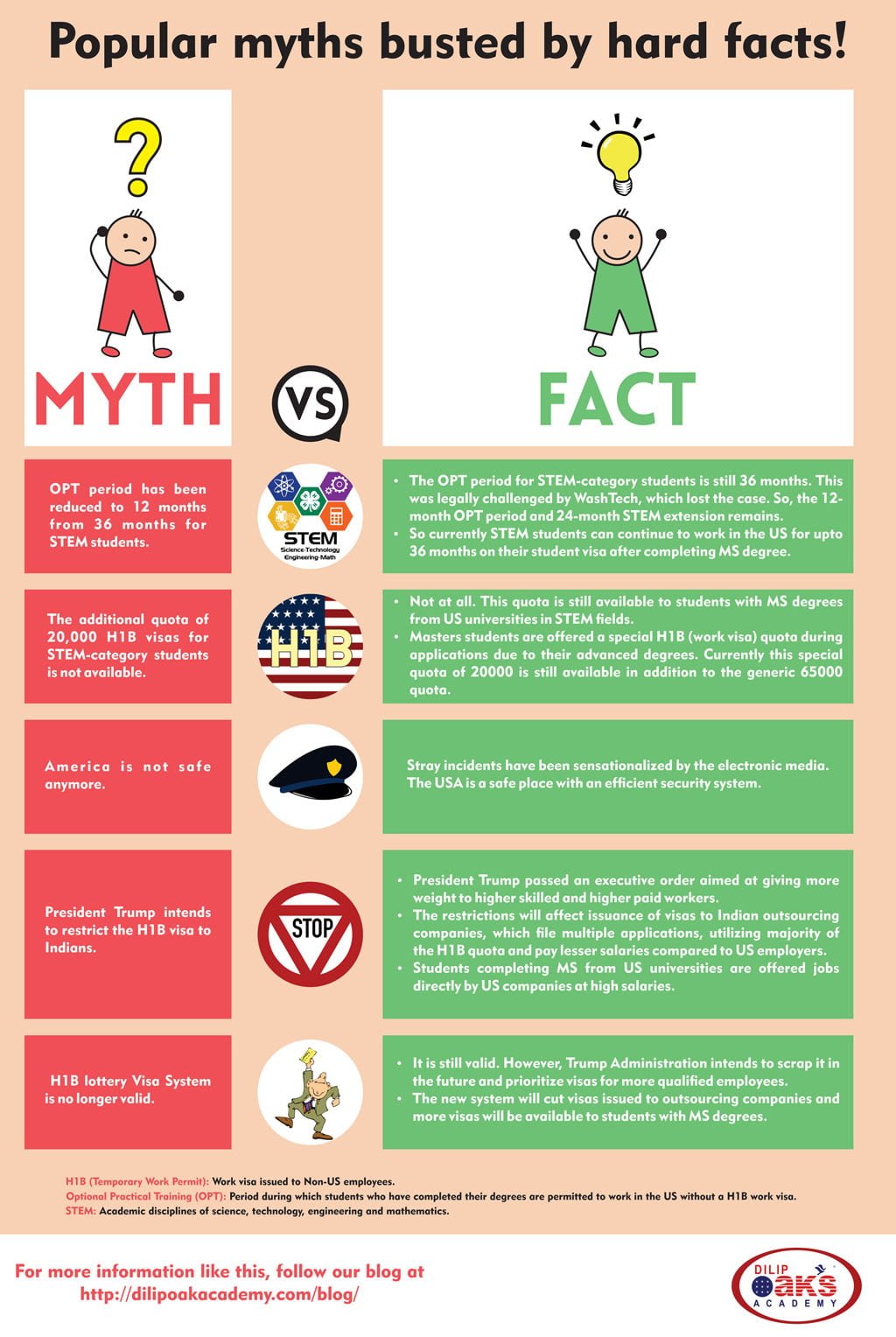
Contrary to the rumors floating around, job opportunities after MS in the USA are still available. What matters is your networking and the internships secured by you during your graduate degree. Students from Science Technology Engineering and Mathematics (STEM) fields have 3 years to work on Optional Practical Training (OPT) which allows students with MS degrees to work in the USA without an H1B visa. During these 3 years, you get 3 chances to apply for the H1B visa.

An interesting fact is that for H1B applicants who have completed their MS in the US and who are being sponsored by an American company, the rejection rate is just 1%. Hence, there is a greater certainty of obtaining the H1B visa.
We advise all study abroad candidates to take into consideration all these factors when deciding where to pursue an MS. In case you missed our previous article on why you should apply for an MS in the US in 2019, click here – Why 2019 is a Good Time to Pursue an MS in USA

Why 2019 is a Good Time to Pursue MS in the USA – Part 1

Blog-Why-US-2019

For years, Indian students have been flocking to universities in the United States of America to pursue higher education – mainly MS degrees. However, due to uncertainties in the recent immigration policies, there is some reservation in the minds of MS candidates about whether the USA is still the best option. In this post, we are covering a few points about why 2019 is actually an opportune time to apply to American universities.

1] Trump’s New H1B Policy

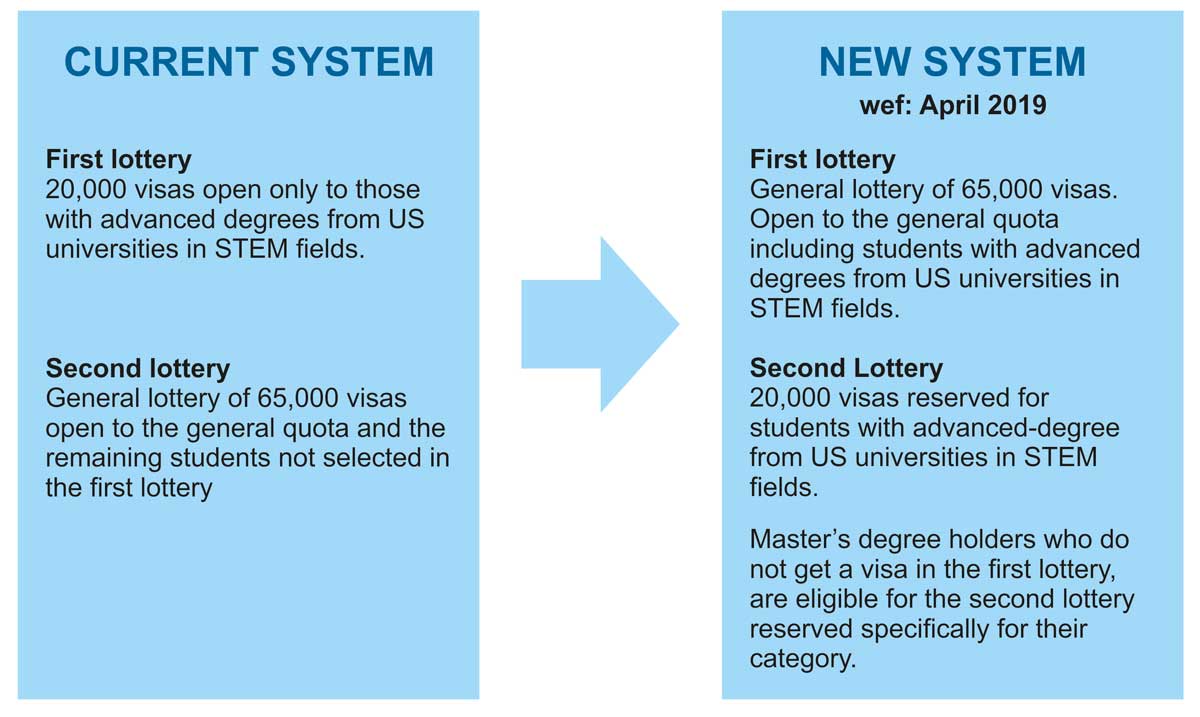
The H-1B visa is a non-immigrant visa that allows US companies to employ foreign workers in specialty occupations that require technical expertise. In late January, US president Donald Trump announced changes in the H1B visa lottery system, which will favour students with advanced degrees in STEM fields from US universities. The new approach may result in an increase of up to 16% H-1B beneficiaries with a master’s degree or higher from a U.S. university.

Statistical Advantage of the New Lottery System


H1B-New-System 

2] Beyond H1B – A Path to Citizenship

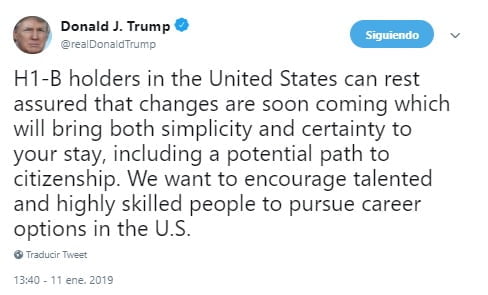
In January itself, Trump expressed his views on merit-based immigration in a tweet. He indicated that reforms would be introduced to ensure ‘simplicity and certainty’ to the stay of H1B-holders in the USA and also incorporate a path to citizenship. Realizing the need for legal immigration of skilled workers, he has said “we want to encourage talented and highly skilled people to pursue career options in the U.S.

11-01-19-Trump-01

Further, a new law has been proposed in the US Congress to abolish country-wise quota for Green Cards. If passed, it could benefit thousands of Indian professionals waiting for a long time to secure Green Card. The proposal has been co-sponsored by 13 Senators and received great support.

To conclude, our advice to students is that do not give up on your dream of pursuing an MS in the US because of unverified rumors. The quality of education provided in American universities, the research facilities and the internships and work experience you will be able to secure are unparalleled. Seize the opportunity and make the most of it!

Don’t Fall into the Fake University Trap! Lessons to Learn from the Arrest of 129 Indian Students in the US

In 2015, when some Indian students were offered a shortcut route to a Master’s degree from the US, it seemed too good to be true! University of Farmington, Michigan was allowing them a CPT (student work-permit) right from Day 1. The students could start working immediately and would not have to attend classes, earn credits or make any academic efforts towards their degree. All that was required was a one-time payment to 8 Indian ‘recruiters’, based in Detroit, Florida, and Virginia, who were recruiting students to this university. These agents themselves were in touch with the university authorities to facilitate the admissions.

“If you take shortcuts, you get cut short.”                                                                           Gary Busey

Little did they know that behind the façade of a fancy admissions website, a Facebook page with an events-calendar and the claim of being accredited was a trap set up by the Homeland Security Investigations (HSI) arm of the Immigration and Customs Enforcement agency (ICE). Even the authorities that the Indian ‘recruiters’ had coordinated with were actually undercover HSI agents. Last week, based on the claim that the students were voluntarily part of this “pay to stay” scheme, 129 Indian students from India were arrested and charged with civil immigration charges. If convicted, the students may face possible deportation.

In the past few years, US immigration authorities have been taking tough measures to deter fraudulent universities that enroll students only so that they can stay in the US till they get an H1B visa. Admissions are usually run by ‘recruiters’ who charge high commissions and guarantee a fake degree, without any consideration for the legality of the process or safety of students. Similar sting operations had been conducted at Tri-Valley University (2011) and Northern New Jersey University (2016) to weed out student-visa frauds – both cases saw a number of Indian students being arrested.

In light of this, aspirants to the US must keep in mind that ‘not being aware of the correct processes’ will not hold up as a justified excuse. When selecting universities, you must do a thorough background check and evaluation of the universities you are planning to apply to.

  • Talk to any seniors of yours who may be studying there.
  • A quick search about the faculty teaching your course is a good idea.
  • Some other essential checks include accreditation, testimonials and QS Rankings.
  • Even better would be to take help from a reputed professional with years of credibility.

Remember, one can never be too safe when thinking about the future.

It has become very common for phony counselors and ‘admissions agents’ to take high commissions from questionable universities in exchange for sending unsuspecting students there. It is only once the fees have been paid and the students start classes, that they realize they have been shortchanged. At this point, any further action requires more fees to be paid and a lengthy transfer process.

However, if you are a student applying through the appropriate channels and to genuine universities, do not let such incident scare you away from pursuing an MS in the US. To safeguard your dreams, it is advisable to take counseling from a reputed source. Get all your doubts regarding which university to apply to, what the visa process includes and how to orient yourself to a new country cleared at once.

Dilip Oak’s Academy has a proven reputation of sending students only to accredited and genuine universities. We take great pride in the fact that over the last 23 years, not even one of the 28,000 students we have sent to the US has ever faced such issues. Safety of our students’ future is our primary concern and that is something that should never be compromised on. We sincerely urge you all to be precautious about this aspect as well.

University Application Deadlines For Fall 2018

The application season is on, December is just round the corner …and university deadlines are coming up soon. So, here is our much awaited blog for university application deadlines for fall 2018.

deadline

Our list covers 128 universities with deadlines ranging from November 2017 all the way up to July 2018. At the end is a section on universities with rolling deadlines (click here to find out what is meant by rolling deadlines).

Remember that US universities update deadlines on their websites at different times during the academic year so, we will update this blog to keep up with changes on their official websites. We have compiled a list of university deadlines with utmost care, however, we request you to kindly cross check the dates displayed on official websites of the university.

Presenting the first in our round of deadline alerts.

Continue reading

Legislation for New Merit Based Immigration System Announced

On 2nd August, President Trump announced that he is backing a new legislation for an immigration reform (Reforming American Immigration for a Strong Economy Act, or the RAISE Act) for foreign individuals who apply for legal permanent status, or green cards, through their employer.

This is going to be immensely beneficial for Indian students in America in the long term. The legislation backs a merit based system which gives preferences to highly skilled individuals for immigration. The application process will favor applicants who can speak English, financially support themselves and their families, and demonstrate skills that will contribute to the U.S economy.

Remember that this is still a legislation and not a law, however given that the president himself backs this legislation and Republicans control both senate and house – this is likely to be great news all around.

Following are the key highlights and how this might help highly educated Indian students who currently are / will be employed in the USA.

  1. Today green cards are awarded essentially by queue, and a candidate with higher education degrees, skills and a well-paying job is treated the same way as a candidate with low skills. To make matters worse green cards are awarded by limited country based quotas, putting Indian candidates at a disadvantage due to the large number of applicants. Merit based system will end this.
  2. The change is meant to make the application process fairer and allow applicants to know what their chances are of being approved before applying. Candidates would be able go online, answer questions about their education and employment experience, and learn if their background would help fill a workplace shortage in the United States. Applicants would also receive a score to give them a concrete idea of their chances of obtaining a visa.
  3. Although this proposal will go through many changes and debates – this is a step in the right direction. Indian students who are employed in the US after they complete their education are highly skilled individuals who possess advanced degrees with impressive research & academic backgrounds, so they should be able to clear bar for the merit based systems based on their qualifications and work experience without difficulty. This system is similar to the current immigration systems adopted in Canada and Australia – which have proven to be far better in terms of making immigration fair and efficient.

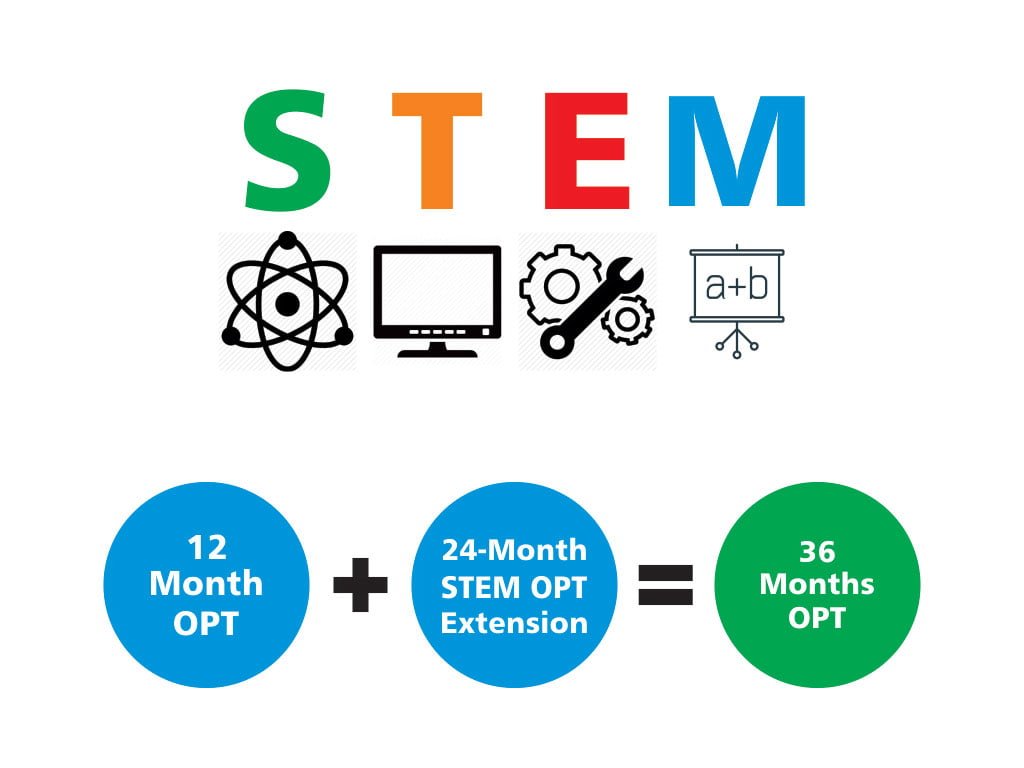
Great News (12 + 24 = 36 Months) STEM OPT Rule Survives!

Optional Practical Training (OPT)

12 Months: Granted to students on F1 (student) visa status completing undergraduate (BS/BA) or graduate (MS/MBA) degrees

24 Months Extension: Students with degrees from STEM (Science, Technology, Engineering & Mathematics) fields

Therefore, students completing a degree from the STEM field get an OPT period of total 36 months (Regular 12 months + 24 months extension), permitting them to work in the US without H1B visa.

STEM-OPTOPT is a temporary employment authorization that is directly related to a student’s area of study. Students pursuing their education in the US on student (F1) visa are eligible to work in the US under the F1-OPT visa program, which gives them an opportunity to apply the education obtained in an academic degree to a practical work experience.

A federal judge has dismissed a lawsuit brought by the Washington Alliance of Technology Workers (WashTech) that challenged the STEM OPT regulations that allow F1 visa holders who have degrees in STEM fields to extend their one-year Optional Practical Training (OPT) period for an additional 24 months.

The dismissal ends this lawsuit, and the current rules governing 12-month OPT and the 24-month extension for students from STEM fields remain in place.

California State University Conducts Interactive Session for Students at Oak’s Academy

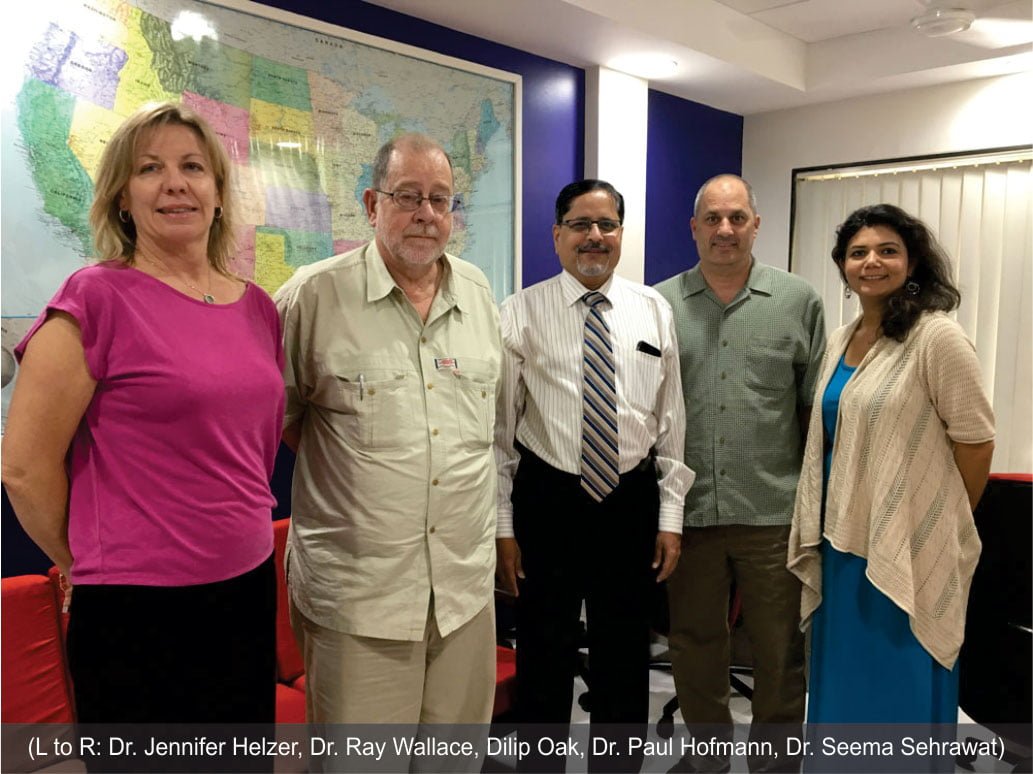
A four-member team representing four campuses of California State University visited Dilip Oak’s Academy, at Bhandarkar Road, on Tuesday, 11th April 2017. The visiting delegation comprised:

Dr. Ray Wallace
Executive Director (International Programs and Senior International Officer)
California State University, East Bay

Dr. Paul Hofmann
Associate VP (International Programs and Global Engagement)
California State University, Sacramento

Dr. Jennifer Helzer
Director – International Education
California State University, Stanislaus

Dr. Seema Sehrawat
Associate Professor and International Officer
California State University, Chico

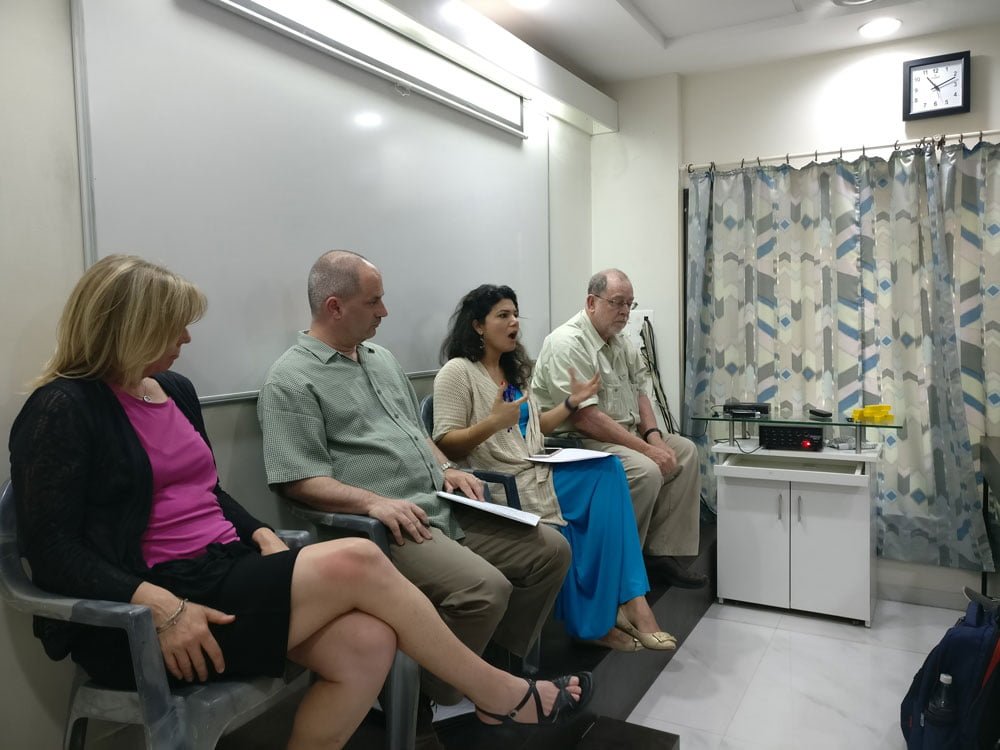
The university officials addressed the students on a variety of topics that were important and relevant to the latter. They also took their questions and generally dwelt on the challenges they were likely to face as graduate students in the US. They spoke with students on resource management, coping with academic pressures, on-campus employment opportunities, and safety-related issues. 

CSU-Visit-Oaks-AcademyDr. Ray Wallace dwelt on three topics: employment opportunities in the US after MS, the dynamic of the H1B immigration regulations, and what he called the “Trump effect.”

Dr. Wallace expressed the view that employment opportunities in the US after MS, particularly in the IT sector were “spectacular”.  He revealed that companies were hiring university graduates “aggressively” and that job opportunities in the US at present were “strong”. Dr. Wallace predicted that economic growth during the next couple of years “will stay positive”.

Dwelling on the dynamic of the H1B immigration regulations, Dr. Wallace was of the opinion that the Trump Administration did not have problems with overseas students coming to US universities, and added that it had issues with contracting and consulting companies like Wipro, Tata Consultancy Services, etc., which he pointed out had historically netted a large percentage of H1B visas from the quota allocated to Indians.

Seeking to allay the fears of students in general, Dr. Wallace assured them that change comes slowly with regard to regulations in the US and that change will be positive for university graduates. These changes will only present university graduates with more job opportunities, higher salaries, and less resistance in the immigration context.

Referring to what he called the “Trump effect”, Dr. Wallace shrugged off rhetoric of the US President during his election campaign and stated that he was a different man when he interacted with IT majors in the US. Dr. Wallace quipped, “Trump doesn’t speak like that to Bill Gates or people from other major IT companies like Apple,” and added that as a businessman himself, Trump understood and seemed to be sympathetic to the pleas of heads of IT companies for flexibility in immigration-related regulations as they needed to hire people from abroad. Therefore, Dr. Wallace said that change will only be positive for higher education, especially for students with master’s and PhD degrees in the STEM category.

Dr. Paul Hoffman pointed out that there was a wide range of on-campus jobs up for grabs for graduate students who chose to take up a job during their second or third semester. These included academic and non-academic job opportunities, he added. Dr. Hoffman said taking up an academic job on campus could lead to internship opportunities which receive academic credit for off-campus work experience.

On graduation, Dr. Hoffman revealed, one could transition to a period of practical training for 12 months. He stressed that STEM-major students could avail of an additional 24 months of off-campus employment, which would mean 36 months of practical exposure and experience for them. Dr. Hoffman stressed that students could thus make the most of the inherent privileges that would accrue to them by virtue of their H1B visas. He also disclosed that, often, such students are sponsored by their companies for an H1B visa, later, which allows them to continue working in the USA after this initial three-year period.

Dr. Seema Sehrawat spoke on the American education system. She pointed out that in the US students got a lot of practical knowledge. She said whenever she spoke with students of Computer Science, Computer Engineering, Electrical Engineering, and even MBA, all of them talked about how they greatly valued the practical basis of the education system in the US. Dr. Sehrawat did sound a note of caution on how this could pose a challenge initially to Indian students who are more accustomed to theory-oriented studies in India.

She pointed out that American professors were generally very dedicated and always there for their students. Referring to the current political climate, Dr. Sehrawat advised students not to go by heresay or exaggerated media reportage. She urged them to focus on their future and think of what the American system had to offer to them. Speaking of California, she emphasised that California was “quite safe” and added that it was a “melting pot” that welcomed diversity.

Addressing-StudentsAgainst the backdrop of attacks on Indians in the US, the experts pointed out that Indians staying in the US should be well aware of their surroundings and make the correct decision regarding matters such as whether or not stay out late at night. Untoward incidents occur usually late at night after partying. Therefore, it is advisable not to put oneself in such vulnerable positions.

University campuses and its surroundings, they stressed, are safe and every campus has a highly organised and professional police department. Every university is particular about student safety and makes it its top priority, they pointed out. The American people, they specially emphasized, are very supportive of cultural diversity. Sensational media reports usually refer to stray incidents in some trouble spots of the US such as the “Midwest” and some of the southern parts of the country.

Stressing security and safety, Dr. Sehrawat, speaking from her personal experience as an expatriate Indian, opined that American people in general were kind hearted and welcoming, and that one could easily make friends with them.

The visiting delegation of California State University officials spent a couple of hours interacting with students at Dilip Oak’s Academy. They gave students their calling cards and encouraged them to meet them when they joined their colleges.