Master’s With Thesis or Non-Thesis?

Once you approach the first semester of your degree program in an American University you will be asked to meet the academic advisor. You will have to decide on your academic plan, during which you will select whether you would like to complete your master’s course with or without thesis. Almost all American universities offer an option for thesis.

Why should I choose thesis option while pursuing Master’s degree in USA?
Course structure varies from university to university. If you apply for master’s with thesis option the course gets divided into research in a specific area, after completing your core courses. Under the thesis option, you will work under the guidance of a professor with a focus on a specific research area. You would are required to successfully complete and defend the thesis after which it could be published in journals or conferences.

Expenses during your degree program can be taken care of, as you may get funding from the professor in form of teaching, research or graduate assistantship. However this should not be the consideration for taking up the thesis option.

Master’s with Thesis option may help you to get a good research-oriented job. Even if you are not inclined towards a research-oriented job, such research-based academic background can help you land a better job as you have an edge over your peers who chose to do their master’s without research. Additionally, your professor will highlight your research capabilities such as creative problem solving, knowledge, motivation, and intelligence. His / her recommendation letter will hold a lot of weightage at the time of campus recruitment or application to doctorate programs, if you may so decide after your master’s.

If you plan to pursue a doctorate, the university you will be applying to would be interested in knowing more about the thesis topic/s and the reasons behind choosing it. Thesis is a very important factor for getting admission for PhD – it acts like rungs of a ladder leading to admission to a good PhD program in a university of your choice.
The Credit System for Master’s Courses in American Universities: Part 2

Credit hours are a way of numerically representing all work completed. They are not the same as the actual ‘classroom contact’ i.e. instructional hours. Most institutions of higher education in the U.S. operate on an academic year divided into two equal semesters of 15-16 weeks’ duration, with a winter break of 2-3 weeks and a summer session of 10-12 weeks, plus additional shorter breaks. The actual amount of academic work that goes into a single semester credit hour is often calculated as follows:

  • One lecture (taught) or seminar (discussion) credit hour represents 1 hour per week of scheduled class/seminar time and 2 hours of student preparation time. Most lecture and seminar courses are awarded 3 credit hours. Over an entire semester, this formula represents at least 45 hours of class time and 90 hours of student preparation.
  • One laboratory credit hour represents 1 hour per week of lecture or discussion time plus 1-2 hours per week of scheduled supervised or independent laboratory work, and 2 hours of student preparation time. Most laboratory courses are awarded up to 4 credit hours. This calculation represents at least 45 hours of class time, between 45 and 90 hours of laboratory time, and 90 hours of student preparation per semester.

A master’s degree program requiring at least 33 credit hours and including a research thesis or project represents over 4,000 actual hours of supervised and unsupervised (independent research) study, while a doctoral program can represent 8,000 or more actual hours of advanced study and research beyond the master’s degree.

Success Stories of Indians Who Made It Big in America – Ajay Bhatt Inventor of the USB and Other Achievers

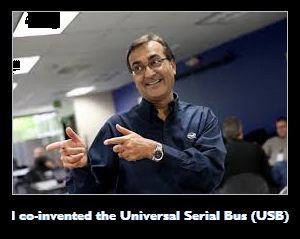
If you use a desktop, laptop, mobile phone, tablet or external hard disk drive, it’s impossible not to know about the USB (universal serial bus) port. The news is that this port, used to transfer both information and power between devices, is now about to become more versatile – there are plans to make it flippable and also able to deliver the power required by larger networks. But did you know that the inventor of the USB port is an Indian? Well, it’s true and his name is Ajay Bhatt.

After graduating from the Maharaja Sayajirao University of Baroda Bhatt went on to The City University of New York, where he received his master’s degree. In 1990, Bhatt joined Intel Corporation as a senior staff architect on the chipset architecture team. Currently, he holds thirty-one U.S. patents, and several others are in various stages of filing. Some time ago IEEE Spectrum did an interesting interview with him about how Intel made the USB truly universal and other things like an ‘all-day’ computer project he is working on (read: a computer that you can use all day on a single charge) and some of his past achievements (click here to see “Ajay Bhatt: Intel’s Rock-Star Inventor”).

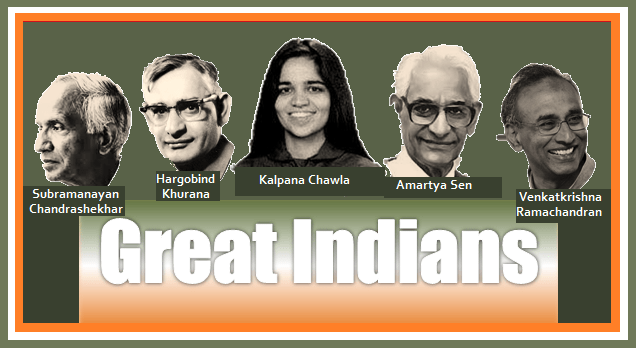
However, despite his ‘rock star’ inventor status Bhatt is only one of a highly talented group of Indian movers and shakers in the field of technology in the US. Here are few of the many other outstanding achievers in the list:

Continue reading

Free Score Reports for the GRE, GMAT, TOEFL and IELTS Tests

Each of the major tests that students generally take to get higher education in the United States – i.e. the GRE, GMAT, TOEFL tests – allows you to send you scores to a certain number of universities or colleges free of charge.

  • GRE – 4 free score reports
    • names of universities to be specified on the day of the test, immediately after your exam
    • current fee per score report thereafter $ 18
  • GMAT – 5 free score reports
    • names of universities to be specified on the day of the test, immediately after your exam
    • current fee per score report thereafter $ 28.00
  • TOEFL – 4 free score reports
    • names of universities to be specified one day before the test
    • current fee per score report thereafter $ 25
  • IELTS – 5 free score reports (to universities accepting an IELTS score) + 1 given to the candidate
    • names of universities to specified in the IELTS application form
    • additional score reports may be requested directly from the testing center – the fee for additional reports will be specified by the test center
Read our subsequent blogs for more details on free score reporting.


Success Stories: Indians Who Made it Big in America

Indians have made tremendous contributions to America in a variety of fields including technology, business and education. In fact, they have become such a prominent part of American society that Indian characters have started appearing in American films and comics (think of the Harold and Kumar film series made in 2004 onward and Raj Patel, a character introduced by Archie Comics in 2008). One reason why Indians have been so successful there is that America has provided a great platform for them to grow.

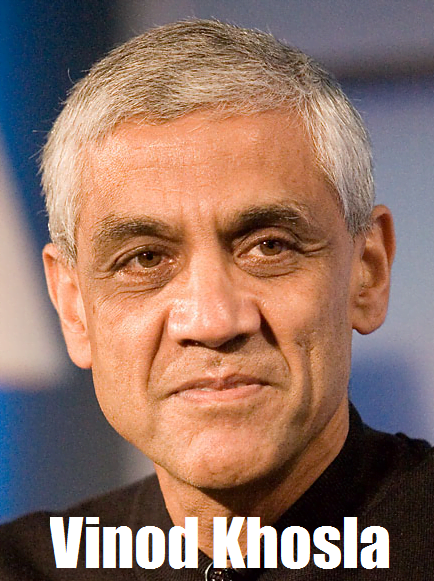
So, to encourage you as you move towards your goal of higher education in America, from time to time we will be posting stories on Indians who, like you, went to America for education and then became great successes. There are dozens of inspiring success stories to pick from. Our first one is on Vinod Khosla, co-founder and first CEO of SUN Microsystems, the company that, among other things created:

  • the Java programming language
  • the Network File System (NFS)

and also significantly evolved several key computing technologies, including

  • Unix
  • RISC Processors
  • Thin Client Computing and
  • Virtualized Computing

We hope that you will enjoy and be greatly motivated by the enormous achievements of those who went to America before you. (See next post for Vinod’s story).

Indians Who Made It Big in America: Vinod Khosla


An entrepreneur is someone who dares to dream the dreams and is foolish enough to try to make those dreams come true.”

~ from the website of khoslaventures

Education Track:

  • B. Tech (Electrical Engineering), IIT Delhi
  • Masters in Biomedical Engineering, Carnegie Mellon University
  • MBA Stanford Graduate School of Business

Achievements:

  • Net worth 1.5 billion as of March 2013 (according to Forbes)
  • He has created 6 jobs for everyday that he has been in America
  • One of the founders of Indian School of Business

His Story For a superb read on Vinod Khosla’s life, philosophy and achievements click here

Vinod Khosla Quotes:

“My philosophy in life is I don’t mind failing in trying new things. But it better be relevant if we succeed. I don’t mind the low probability of success, but I better be impactful if we do succeed.”

“Our willingness to fail gives us the ability and opportunity to succeed where others may fear to tread.”

and here’s one from Michael Jordan, who is obviously a role model for Vinod Khosla

“I’ve missed more than 9000 shots in my career. I’ve lost almost 300 games. Twenty six times, I’ve been trusted to take the game-winning shot and missed. I’ve failed over and over and over again in my life. And that is why I succeed.”

GRE News: ETS Test Prep Videos Available

With earlier versions of the test, students would go to the ‘Big Book’ for practice on actual GRE test papers of the past. With the Revised GRE coming in August 2011, A new version of the prep book called the Official Guide came in. Now, the GRE® program also offers ‘GRE® Success Starter videos’ to help you crack the GRE®.

There are two videos:

  • GRE® Success Starter: Tips & Strategies for the Quantitative Reasoning Section
  • GRE® Success Starter: Tips & Strategies for the Verbal Reasoning Section

The videos are designed to help you familiarize yourself with the two most important sections of the test: Quantitative and Verbal Reasoning. According to Dawn Piacentino, Director of Communications and Services for the GRE Program at ETS, , “In less than 20 minutes each, these videos walk test takers through examples of the different question types in the test, provide strategies for answering each question type, and share useful tips and strategies.”

Continue reading

GRE News: ETS Opens Customer Support Centers in India

Here’s an additional bit of good news for GRE test takers in India. The growing number of students taking the GRE® test in this country has pushed the GRE Program to open customer support centers here.

According to the ETS, the new GRE Customer Service Centers will “provide guidance and information for individuals preparing or planning to take the GRE® revised General Test or GRE® Subject Tests. Information about test preparation materials, test centers and dates, score reports and other test-related inquiries can be answered by call center staff.”

The ETS adds that India Indian students, “may call the new GRE Customer Support Center toll-free at 000-800-100-4072, Monday–Friday from 9 a.m.–5 p.m. IST. In addition, inquiries can be sent via email toGRESupport4India@ets.org.”

This should make registering for, scheduling and cancelling the test much easier for students.

Related:

Dr. Harchol-Balter on the Recommendation Letter

Ideally you would like to make all your letters of recommendation count. Consider the following two letters:

(i) Letter 1: “I highly recommend student X for your graduate program. Student X received an A+ in my undergraduate algorithms class. He was ranked Number 2 out of 100 students. He got the highest score on the final. He worked very hard all semester, never missed a class, and was always able to answer the questions that I asked in class. This conscientious attitude makes him an excellent candidate for any graduate program. ”

(ii) Letter 2: “I highly recommend student Y for your graduate program. Student Y received a B in my undergraduate algorithms class. He was ranked Number 29 out of 100 students. Halfway through the semester we started working on network flows. Student Y seemed extremely excited by this topic. He disappeared for 4 weeks and even missed an exam. However when he came back, he showed me some work he had been doing on a new network flow algorithm for high-degree graphs. He had done some simulations and had some proofs. I’ve been working with student Y for the past couple months since then and he is full of ideas for new algorithms. I think student Y’s initiative makes him an excellent candidate for any graduate program.”

Which letter do you think is stronger? It turns out that Letter 2 is very strong. Letter 1 actually counts as 0. At CMU we mark all letters like letter 1 with the acronym D.W.I.C.. This stands for “Did Well In Class” which counts for 0, since we already know from the student’s transcript that he did well in class. By contrast, student Y’s letter gives us a lot of information. It explains that the reason student Y didn’t do better in class was that he was busy doing research. It also tells us that student Y started doing research on his own initiative, and that he is quite good at doing research. The professor was impressed enough with student Y’s ideas that he took him on as a student researcher despite student Y not having high grades.

You want your letters to all be of type 2 (this doesn’t mean that you should skip class!). Remember that letters of type 1 will not count. You want words like self-motivated, strong research potential , own initiative, independent, and driven to appear in your letters. These are the words that we circle when reading recommendation letters. You therefore want to ask letters from people who have seen you do research. These may be professors or employers.

Related Blogs on Application Documents

Related

American Universities and Colleges on Social Media: What Information is Out There?

Social media platforms are proliferating. Free and increasingly sophisticated technological tools like LinkedIn, Facebook, and Twitter offer easy access to information about colleges and universities in America – and both colleges and students are trying to take advantage of the trend.

One of the more positive things that graduate schools do in the social media space is to post content about faculty research and what their students are doing. Facebook is responding to this trend with the launch of “Groups for Schools” which will allow only those students (current and prospective), faculty and staff members with a valid “.edu” email address from their schools to sign up and join the group. Using these groups admissions departments can reach and attract prospective students by posting admission information, answers to frequently asked questions, and relevant articles.

Continue reading

Great Ways to Build Your LinkedIn Profile

  • Keep adding contacts. After you have added all the relevant contacts from your email list (the first step when you join LinkedIn) send requests to connect to:
  1. Teachers whose courses you are taking. Those with a good standing in the field are especially desirable as contacts.
  2. Project guides (internal and external)
  3. Teachers and professionals who you consult about seminars, research papers, curricular projects and those for competitions etc.
  4. Classmates in college who share your academic/professional interests (keep touch with the others on Facebook)

These steps will help you build a large network in a short time. Start this process now while at your college here in India and continue when you join your American university. The contacts that you make at your American university during internships, while working on projects, research or papers are likely to be among the most useful and important ones you make.

Continue reading

Dr. Harchol-Balter on the Statement of Purpose

The statement of purpose is an extremely important part of your application packet (click here for an explanation). A well-written SOP that brings out the most important facts about you as a candidate for higher studies, can open the doors of opportunity for you. On the other hand an SOP that tries to impress but focuses on facts that the admissions committees consider irrelevant can lose you the opportunity that you have dreamed of.

In the extract below Dr. Harchol-Balter, an Associate Professor of Computer Science at Carnegie-Mellon University points out two common mistakes that many applicants make:

The grade regurgitator – “In my high school, I was ranked Number 1. Then I got a perfect score on my college entrance exams. Then I competed in a statewide math competition and I was the best. Then I competed in a national programming competition and I was 5th. In college, my GPA was 3.95 out of 4.0. For these reasons, I believe I will do well in your graduate department.”
What’s wrong with this? This portion of the essay is a waste of space. Awards are certainly relevant, however any award you won should be listed on a separate piece of paper which is titled “Awards and Honors” and which you can include with your application. There is no reason to tell us all this in your essay. It will only piss-off the people reviewing your application because they already read all this information earlier in your application and they now want to hear about research.
The boy genius – “When I was born, my mother gave me a glass ball to play with. I would lay and look at the prisms of light shining through my ball. At age 3, my father brought home our first computer and I disassembled it and then put it back together. It was then that I knew I wanted to become a computer scientist. By age 5, I had taken apart every appliance in our house. At age 6, I became a chess whiz ….”
What’s wrong with this? We simply don’t care what you did as a child, and we don’t believe you either. You’d be surprised how many applications from Einstein-wanna-be’s we get. If you really think this is relevant, put the important facts on a separate sheet of paper, and include it in your application. It’s best if your essay can stick with stuff you did in college and later.


Related Blogs on Application Documents

Related