Why 2019 is a Good Time to Pursue an MS in the USA – Part 2

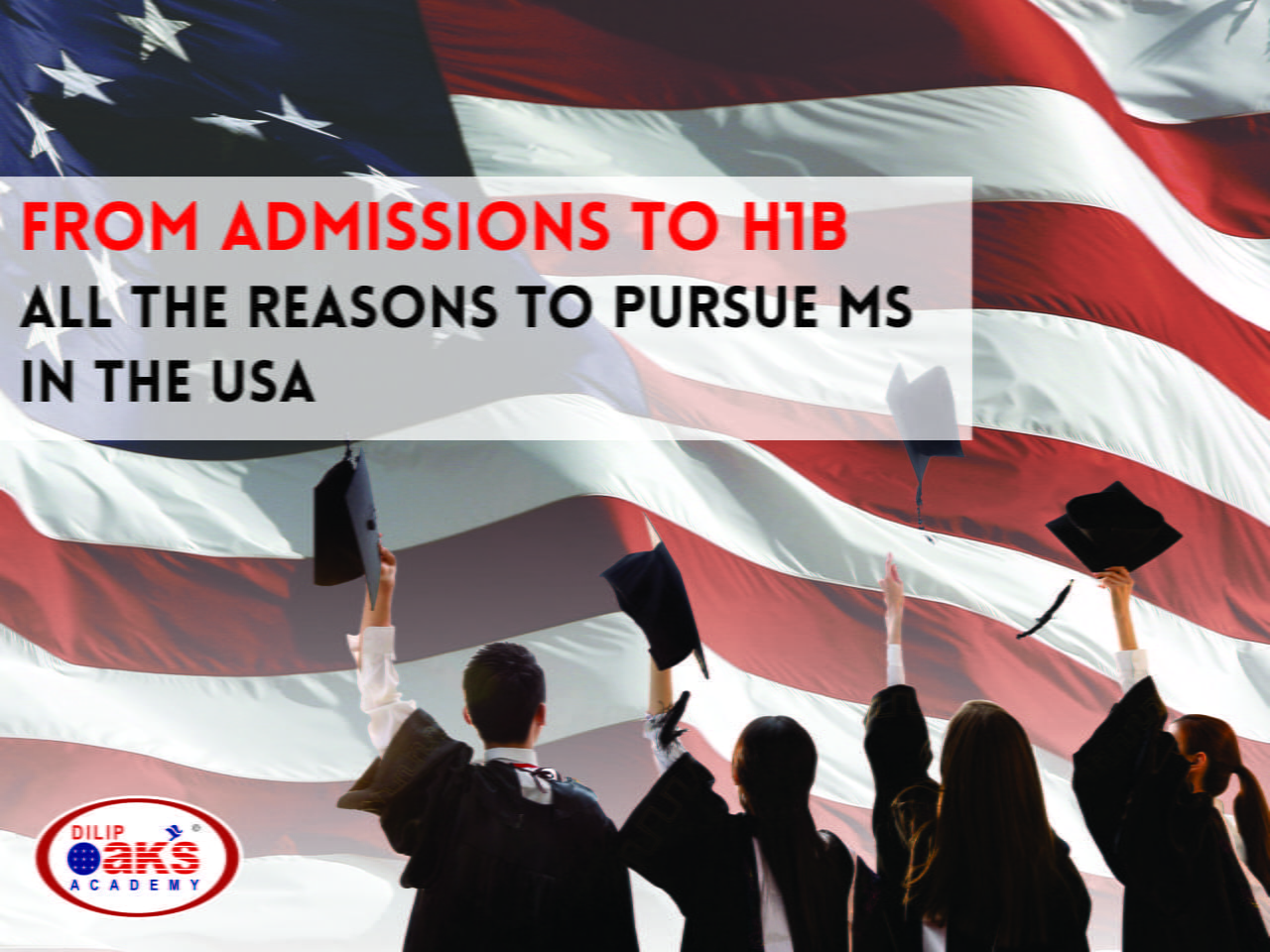
Following the positive response we received on our last blog post “Why 2019 is a Good Time to Pursue an MS in the USA – Part 1”; here are some other key benefits of applying for an MS from a US University this year.
Blog Part 2

Due to needless panic following the election of President Trump, there has been a drop in the number of students joining US universities. The reality is that the job situation is actually improving for students completing their MS from the US. In fact, the decline in number of applicants makes it easier for students with even lower GRE scores and average academics to get into good universities. Financial assistance too has become easier to secure! Read on for an in-depth understanding of the current advantages of applying to the US.

Certainty of Admission to Reputed Universities
Since the USA is a larger country, it boasts of a large number of reputed universities all across the country. Thus, American universities can absorb a greater number of students into Masters Programs as compared to other countries.

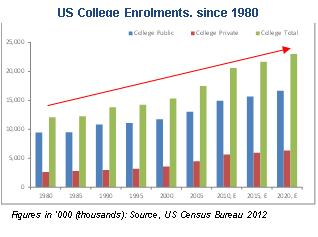
Further, the number of students applying to the US for post-graduate degrees has been declining. As a result, more seats are available since the competition is less cut-throat right now.

Financial Assistance during MS
Due to lesser students enrolling for programs, there are more campus jobs available – so it’s now easier to get one. Getting a campus job can take care of the living cost for both years. Apart from this, chances of getting Teaching Assistantship, Research Assistantship and Graduate Assistantship in the first or second semester itself are much higher as compared to earlier.

Jobs and Visa after Graduation
Contrary to the rumors floating around, job opportunities after MS in the USA are still available. What matters is your networking and the internships secured by you during your graduate degree. Students from Science Technology Engineering and Mathematics (STEM) fields have 3 years to work on Optional Practical Training (OPT) which allows students with MS degrees to work in the USA without an H1B visa. During these 3 years, you get 3 chances to apply for the H1B visa.

An interesting fact is that for H1B applicants who have completed their MS in the US and who are being sponsored by an American company, the rejection rate is just 1%. Hence, there is a greater certainty of obtaining the H1B visa.
We advise all study abroad candidates to take into consideration all these factors when deciding where to pursue an MS. In case you missed our previous article on why you should apply for an MS in the US in 2019, click here – Why 2019 is a Good Time to Pursue an MS in USA


‘MS in US’: Eligibility, Costs, Job Prospects

M.S. in U.S.

When you are thinking of getting a Master’s or doctoral degree in America, some of the top questions on your mind would be:

• What are the academic requirements in order to be able to apply?

• What are the costs of getting a degree in the US?

• What are the job prospects?

Here’s a quick look at the answers to those questions.


What is the eligibility for applying for a Master’s course in America?

The basic eligibility requirement is 16 years of formal education (12 + 4), the last 4 from an accredited university. So, students who have bachelor’s degrees in engineering (whether they joined engineering courses directly after the 12th Std. or after a diploma course) can directly apply for American Master’s courses. However, students who have completed a three-year degree (e.g. B.Sc.) should ideally complete their Master’s degrees (e.g. M.Sc.) in India and then apply.

Note: External degrees and degrees from open universities that are not accredited may not accepted by American universities.


What is the cost of education in America?

The cost of education in America varies from Rs. 12,00,000 to Rs. 30,00,000 depending on:

• the type of university (private or government-aided)

• its rank

• its geographical location

Apart from tuition fees you also have to bear the costs of:

• insurance

• living (food + housing)

• transportation.

There are many ways to reduce these financial burdens however. Many students manage to get some kind of financial assistance in the form of:

• research and teaching assistantships

• tuition waivers

• on-campus jobs etc.

Such kinds of financial assistance take care of a large part of the expenses incurred when studying in America.


What are the job prospects after completing a Master’s degree course in America?

• After completing your course you are allowed to undertake Optional Practical Training (OPT) for 12 months. OPT may be extended for another 17 months if you fall under the STEM (Science, Technology, Engineering and Mathematics) category

• Ample job opportunities exist in the fields of engineering and computer science (much tech talent in America is Indian and many Indians hold top positions the field – as is evident from the case of Satya Nadella, CEO Microsoft).

Note:

• Professors’ recommendations carry a lot of weight. To get a job you must get excellent references from professors who taught you during your master’s course.

• When you are working in America, your company may apply for H1-B visa (work permit) on your behalf. After this you can apply for a green card.

So, get ready to get your MS in US!


The Solvency Certificate

The ‘solvency certificate,’ which is also known as a ‘capability certificate’ is a letter from your banker stating that you are capable of raising funds equivalent to your tuition fees and costs of living in the United States. Most bankers are willing to give these certificates to their regular customers. This certificate is one of the documents that you will need to send along with your application form to the university that you are applying to.

Note that if the university to which you are applying demands a ‘bank certificate’ indicating the actual funds available in your bank account, then a solvency certificate will not be acceptable.

Great FREE Application Tools on DOA Online: Part 3 – Question & Answer Forum

Question & Answer Forum

Question & Answer Forum

– What are transcripts?
– When should I register for the GRE test?
– Where can I find university deadlines?
– From whom do I need to take recommendation letters?

The list of questions that come up when you are applying to American universities is endless. Most probably you won’t know where to look for solutions or, whom to ask for the answers. That’s where the next of our great free application tools comes in – the DOA ONLINE Q&A FORUM.


On the Q&A Forum (click screenshot below for enlarged view) you can:

  • ask any questions you have regarding the application process for American universities

  • get answers and expert advice from the academy (look for answers by the admin!)
  • get valuable tips and insights from other registered users – since they have gone through the same situations and problems, their advice is often the best: no one understands your situation better than those traveling on the same path!
  • consult the vast database of questions and answers already on the Q&A forum.

Continue reading

MS in US: Fundas on Funding


Do You Have Any Idea of How You Are Going to Pay for Your American Degree?

Funding for your education in the United States is an important issue. Costs can range from Rs. 20 to 40 lakhs. Where is all that money going to come from?

If you’ve been wondering about that crucial question, here are two links that will help you. You don’t have to be super rich to get your master’s or a PhD from the States, nor do you have to have an uncle with a Swiss Bank account! The universities themselves will help you and so will others. Find out how with these two really important links:


Should I Apply for the Spring Semester (January)?

Many students are interested in joining American universities in January, that is, in the spring semester. But, there is a common misunderstanding that many universities do not accept students in the spring semester and that funding opportunities are also fewer. This, however, is not true. Almost 95% of American universities admit students for the spring semester.

Opportunities for financial assistance in spring are also as good as in fall. Of course, in some universities, a few courses are offered only in the fall semester, so students who join in spring cannot take them. However, with regard to financial aid, most universities offer Research and Teaching Assistantships, tuition waivers etc. only to students who have completed one semester, with a very good GPA (Grade Point Average). Hence, whether you join in the fall or spring semester does not really make a difference.

Higher Education in the US: How to Make it Happen!

US is the #1 choice for Indians going abroad for higher education

Today, the dream of getting a US degree is no longer something that only the “rich” can dream of. Now many students from middle class backgrounds can also get higher education in the US, without putting a huge financial burden on their parents. This is evident from the recent trends:

  • Overall, the number of Indian students going abroad for education increased 256% in 2000-2009
  • An estimated 21 million students will be admitted into American universities in Fall 2013

The facts also show that America is the most popular educational destination especially for engineering and business:

  • The top three destinations for Indian students going abroad are: #1 America, #2 Europe, #3 Australia
  • America dominates, with a lion’s share of over 50% of the students
  • The top two streams at American grad schools are Engineering & Business

There is great demand for higher education in the US.


What is driving the trend?

As the American economy recovers from the recent 2008-2010 Global Economic Crisis, employment rates in the country are improving. There is a great need for skilled labour, particularly of engineering graduates across fields. According to US Bureau of Labor Statistics (BLS) projections, US companies alone created 178,000 engineering jobs between 2008 and 2010. In fact, Engineering (Biomedical Engineers, Software Engineers and Environmental Engineers) featured at the very top of BLS list of the “Fastest Growing Occupations.” This growth is being driven by the growth of technology giants such as Google, Apple, Oracle and a sharp rise in the number of ‘start-ups’ or new technology companies. The change in traditional businesses to automated, mechanized or digital formats is another reason driving a huge need for engineers in the US.

What makes it possible for the middle class?

The key factors that make an American education possible for all types and categories of students are the availability of:

  • a variety of easy funding and repayment options
  • focused examination preparation and coaching
  • professional counseling through each and every step of the admissions process has made this possible.

Find out more on how YOU can get an American degree at our FREE SEMINAR on “Higher Education in the US”

Time: 5.45 to 8 pm

Date: Sunday the 17th of February 2013

Venue: Ganesh Kala Krida Manch, Pune.

This seminar is open to all students, working professionals and parents.

No prior registration needed!

In case you have any questions, please contact the Dilip Oak’s Academy Office

By e-mail: support@dilipoakacademy.com, OR Call: +91-020-25656237, 25678066, 25654052

UC Irvine – and How I Got Admission There!

This week we bring you Suhas Bhadgaonkar, a software professional, and one of our alumni. He’s here with his experiences in getting admission to UC Irivine.

____________________________________

Profile:
Name: Sagar Suhas Bhadgaonkar
Degree: BE (Computer Engineering), Univ. of Pune
Work Experience: 2.5+ years in Accenture Technology Solutions, as a Software Engineer
GRE Score: 1400 (Old Scale)/ 322 (New Scale)
Break Up:
Verbal: 640 (Old Scale)/162 (New Scale)
Quant: 760 (Old Scale)/160 (New Scale)
TOEFL: 112/120

____________________________________

My journey to a US university started when an acquaintance came to visit my home in Pune after spending a few years working for Oracle in San Jose. It was mid-May, and some of my other friends from Accenture had got admits from American universities and were planning to get visas and complete other application formalities. There was a ‘buzz’ in the air about going to America. My friend’s visit was like a little piece of sodium dropped into a bowl of water. The thought of the opportunities that lay in wait for me in the US began to bubble up in my mind. When the ‘reaction’ had subsided, higher studies and subsequent professional opportunities in America were the clear focus.

Like a lot of us who are now going to US, I was born and brought up in a middle class family with no immediate relatives in US). So, though the thought of studying further, or doing ‘something’, had been present in my mind for quite a while, I had never planned on going to US for higher education. The examples of my friends started me thinking about pursuing an MS in the USA.

Continue reading