The SMART way to boost your GRE Prep (part 2)

In our earlier blog, dated 20/07/2020, we laid the groundwork for the preparation of the Quantitative Reasoning Section. Today, we will study the SMART way to fine-tune your GRE preparation and achieve the desired score.

Solve

  • Use your scrap paper effectively. Develop a habit of solving the questions stepwise and systematically as it will help you on your actual test day.
  • Stick to one source of material throughout the course of study.

Manage 

You are expected to complete 20 Questions in 35 minutes for the Quant section that averages nearly less than 90 seconds per question.

Ensure that you understand all the concepts irrespective of the time taken. Starting your preparation well on time would ensure that you have enough time to master all your concepts.

  • Once the concepts are clear, aim to solve questions in a stipulated time frame.
  • A well-devised study plan will set you right on track. In short ‘Plan Your Work And Work Your Plan’

Adapt 

Understand the different question types and their nuances so that you can use suitable techniques for solving them.

  • The GRE questions are relatively easy to solve but sometimes difficult to comprehend because of their verbosity (complex and confusing construction). So read the questions carefully to reveal the hidden concept/s, which, most of the time, may be very familiar.
  • Sometimes, questions that seem relatively easy have some trap set for you, and most of the students fall for it. The answer choices are also designed in such a way that they lead you to a trap.

Review 

  • Note down important formulae, theorems, properties, etc.
  • Maintain a log of topics you have covered and classify them based on their difficulty level so that you can focus accordingly.

Train 

We need to understand some factors which may affect our performance on the actual Test Day.

Get rid of your mental blocks like examination phobia and loss of confidence. Discussing with the faculty members or counselors could help.

Train yourself to remain undaunted even if you come across difficult questions in the beginning because the difficulty level of the questions keeps changing and you may get a simpler question subsequently. We strongly suggest you take our 5 practice tests (CBTs) to boost your confidence. Our CBTs are designed as per the ETS pattern and the score you obtain could give you an idea of your actual GRE score.  

Remember, consistency and hard work are the two main elements required for success in any field. Using the SMART approach discussed above will set you on track for your preparations for the GRE.

Warmup for GRE Quant (Part 1)

Following are some ways to ensure that you build a strong foundation to achieve your targeted Quant score.

Understand your syllabus: Download the ETS Math Review pdf file available for free download on the ETS website, which will give you an overview of the syllabus and solve these questions to familiarize yourself with the format of the GRE Math section and its question types.

Brush up your basics: GRE Math has four main sections: Arithmetic, Algebra, Geometry and Data Analysis, which you have already studied at your school and junior college level. However, a recap of these topics will definitely help you start flexing your Math muscles.

Multiply your speed: Get familiar with numbers by learning your multiplication tables, squares and cubes. This will not only reduce your dependency on the on-screen calculator but also save a lot of your solving time.

Factor out your math phobia: The GRE Math focuses on the application of basic Math concepts, which can be mastered with a little bit of practice. Remember: no trigonometry! no calculus!

Following these guidelines will definitely build a strong foundation for your Quant preparation. In our next article, we’ll help you gear up your preparation by discussing some key strategies.

Amidst the pandemic, when do I take the GRE and start my application process?

Spring 2021

The coronavirus pandemic has severely affected education systems worldwide, and most US universities have moved to online coaching for the fall 2020 session. If you are planning to join an American university in the spring 2021 semester, be aware that this has a few downsides. So it would be a good idea to postpone your plans to the fall 2021.

Firstly, it will not be possible to give the GRE in July due to the ongoing lockdown, and the chances of giving it in August are also bleak. Therefore, it will be difficult to complete the application process before 31st August which is generally the deadline for spring 2021. Secondly, there is no guarantee that your visa will be processed in time or that you will be able to join for the spring semester.

A ‘GRE at Home’ option has been made available but it is not feasible: for one, the stringent equipment prerequisites are difficult to meet and further, questions are being raised about the fairness of online tests.

Considering this, it is safer and wiser to prepare for fall 2021, for which, you must take the GRE before mid-Jan 2021. Most universities also accept scores until March end so; you can plan to take the test accordingly. To help you kick start your preparation, we offer online coaching for GRE which is at par with classroom coaching. Our online classes are interactive, and over 1000 students have already enrolled with us. Check out our GRE online batches here: https://www.dilipoakacademy.com/gre-online.html

Meanwhile, you can proceed with your application process. Aim to finish it by March 2021, before the university deadlines. At Dilip Oak’s Academy, we also provide admission counselling and guide you through the entire application process. For details, visit: https://www.dilipoakacademy.com/study-in-usa.html

GREat Five-Minute Reads: Episode 6

It seems like the end of the lockdown is in view. Social distancing may soon be a thing of the past, but we would like to start a new trend: social reading! Ask your parents if they remember the now-antiquated public libraries…you can do the same with a click: read and share these articles!

Some forward fodder for you to impress your friends!

  1. Investigating the detective fiction of Scandinavia
  2. Tender Loving Care
  3. Heliocentric, geocentric…eccentric?
  4. Evolution of the HMS Beagle: the ship that was home to Darwin
  5. Saving the earth with just a few cents!

Look out for a new Reading List every week on Thursday!

GREat Five-Minute Reads: Episode 5

As GRE-at Five Minute Reads turns “fabulous five” with this list, we would like to commend you, our readers, and present a tongue-in-cheek thank you speech for all those plaudits which are still to come: “Thank you, dear students, for persevering with reading when you would much rather be bingeing, for resisting the temptations of click-baits, and, for providing us with much-required validation on social media! As we stride forth, we want to look back and rejoice!”

So, this week’s list brings you articles on History — that supreme purveyor of lessons, which we never seem to learn!

  1. Dam! That burst destroyed one of the most powerful civilizations in history!
  2. Lincoln Logs: Wartime history
  3. Sticking kids in front of a screen: history of educational television (surely, an oxymoron!?!)
  4. Fun and games from the prehistoric times before Angry Birds and Candy Crush Saga
  5. Environmental history: it is not all fun and games…it is TEOTWAWKI!

Look out for a new Reading List every week on Thursday!

GREat Five-Minute Reads: Episode 4

Take a break from the binge-watching and binge read this week’s eclectic selection which features everything from guns to gurus. Our two listicles talk about human evolution and innovation to focus on the indomitable spirit of our species. The three articles present a triptych on our current situation: an example from antiquity, a glimpse into future consequences, and of course, overcoming harsh conditions and soldiering on in the face of adversity!

Time to begin your binge…

  1. From social networking to undertaking global journeys, our ancestors did it all!
  2. What do AK-47s, office cubicles, and Comic Sans have in common?
  3. All play and no work make Jack duller, dumber, and poorer…
  4. A medieval superhighway to death…
  5. How to paint the town red from your home…

Look out for a new Reading List every week on Thursday!

GREat Five-Minute Reads: Episode 3

Welcome to the latest installment of the GREat Five-Minute Reads. As the dystopic future becomes the current reality, thanks to the worldwide lockdown brought about by a microscopic virus, we present a few distractions that can also serve as drills for your GRE Reading Comprehension and Sentence Completion tasks. Who said learning had to be boring?

  1. iGlasses, anyone? Augmented Reality: possibility or certainty?
  2. Lessons from History to Help you Prepare for the Worst
  3. Plata o plomo? O cobre? Learn how the Spanish conquered the Americas
  4. Did you know you can use oil and eggs to make paintings?
  5. Send out the Bat Signal: these flying oddities are everywhere!

Look out for a new Reading List every week on Thursday!

GREat Five-Minute Reads: Episode 2

In this second edition of GREat Five-Minute Reads, we present to you an eclectic mix of topics to whet your appetite for reading! From historic Moors to futuristic genetic studies, from hot-blooded activists to the cool-headed polar residents, munch on these thought-provoking titbits to make the most of your weekend.

  1. “A woman should have the right to be in the home as a wife and mother”
  2. Fittest or Fattest? It is all the same for these polar bears!
  3. The Moors: Islamic art in ancient Spain.
  4. One Man’s Rebel is Another Man’s Hero!
  5. If you think you may go mad when you are old, think again…or read this:

Look out for a new Reading List every week on Thursday!

Oak’s Online GRE® Prep Tools

As the GRE® test is computer-delivered; the test-taker has to be comfortable with solving questions on the screen. After years of appearing for paper-based tests, this may be a little daunting for the average college student in India. One of the best ways to boost your confidence on the test day is to get used to the computer-based delivery of the GRE® test.

Dilip Oak’s Academy offers an online suite of practice modules and tests. This online suite will help you prepare on the go! The suite includes Focused Practice, Test Prep, Mock Tests, and Vocabulary App and has hundreds of GRE-like questions for both the Verbal Reasoning and Quantitative Reasoning sections. A single sign-in will be your key to unlocking all the online features.

FOCUSED PRACTICE

(Available for our GRE® coaching students only)

  1. Reinforcement of the classroom coaching by helping you keep in sync with the concepts, tricks, and tips taught in the class
  2. 400+ questions for Verbal and Quantitative Reasoning
  3. Topic-wise questions for Quantitative and Verbal Reasoning


STUDY PLANS

(Available for our GRE® coaching students only)

  1. Carefully designed according to your GRE® test date
  2. Wide variety of plans — one month to four months
  3. Sent directly to your inbox: a detailed preparation method with built-in milestones to help measure your progress
  4. Regular reminders to help you prepare for the GRE® test in a more systematic manner


TEST PREPOaks Test Prep

  1. Personalized Dashboard to track your progress
  2. Customized according to the question types and difficulty level
  3. Convenient timed and untimed modes for practice
  4. Instant Review and question summary
  5. In-depth explanatory answers to gauge where you stand


Oaks GRE TestMOCK TESTS

  1. Actual GRE® test experience with full-length timed tests according to the ETS® pattern
  2. Analytical Writing section: Get essay scores and personalized feedback by our experienced evaluators
  3. Detailed Analysis: question by question break up of your performance to help you gauge your strengths and weaknesses
  4. Explanatory Review: help you understand what went wrong and how to get it right the next time

 View our Plans & Pricing for Oak’s Online GRE Prep Tools


VOCABULARY APPOaks Vocabulary App

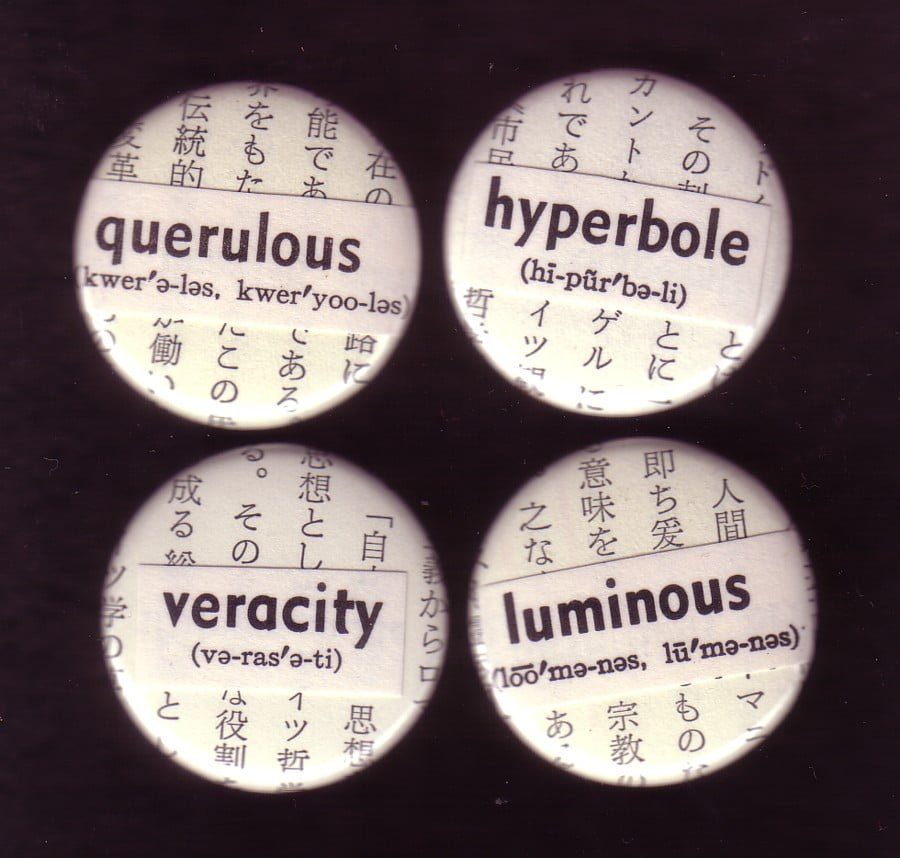
  1. 1500 high-frequency GRE® words
  2. Images illustrating the meaning of words
  3. Sample sentences, and audio and text pronunciation
  4. An interactive audio-visual tool with test mode

You can buy the Vocabulary App from Google Play or App Store

How to Prepare for the GRE Test Day

Preparing for exams

No matter how well you have been preparing for your Graduate Record Examination over a period of time, as the GRE test day comes nearer there are bound to be some jitters and anxiety. Even the most confident of students are no exceptions to these exam day blues. Here are a few tips to calm those nerves and stay confident before and through the GRE test:

  1. Adequate Sleep

Slogging it out the night before the examination is very common. However it does not help you on the exam day. Studies say that a well-rested brain performs better than a fatigued one. So be prepared with all the study material well in advance and avoid burning the midnight oil

  1. Stay away from Caffeine

Caffeine is known to give a refreshing kick for a short time however it has counter effect in the long run. So stay away from black coffee and caffeinated drinks for a day before the examination.

  1. Relax and Unwind

“All work and no play, make Jack a dull boy”, we have heard this quite many times and it’s true too. Play your favourite music, talk to friends or meditate. Do what relaxes you the most (even doodling will do!!). Take short breaks during study time and relax.

  1. Exercise

A light walk or jog or practicing Yoga helps in a big way to calm your nerves. However don’t overdo any exercise as it will induce physical fatigue and later may transform into discomfort and pain.

  1. Eat Light

Eat many small meals instead of one big meal, as it will keep you from feeling drowsy and heavy. It will also improve your concentration and alertness during study and exam.

And all in all you are the best judge of what suits you. Do what you think is good for you. Wish you the best!

Half a Century Plus of High-Frequency GRE Vocabulary

16615941154_7ddf951ddd_o

The following post packs 60+ high-frequency GRE words into a simple but engaging tale from the Panchatantra about how a sage found a suitable spouse for his mouse daughter.See if you can understand the exact meanings of the sentences. If not word meanings along with illustrative sentences are given below.


A Husband for a Mouse

There was once a hermitage on the bank of the Ganga where a community of hermits lived an idyllic life of quietude and meditation, quite oblivious to the world. The hermits were disciples of a sage named Yadnyavalkya, who practiced rigid self-discipline and was always rapt in meditation. One day, while he was performing his diurnal ablutions in the river, a hawk flew over with a female mouse in its talons. Suddenly, the hawk lost hold of the mouse and it plummeted from the hawk’s grip straight into the hands of the ascetic. When he perceived the hawk still lurking above, he knew he could not forsake the mouse, or the rapacious predator would seize it again. So, he placed the mouse on a leaf of a nearby Banyan tree and, using his yogic faculty of transmutation, he changed it into a little girl. He then brought her to the hermitage and said to his wife, “My dear, please accept this child as a blessing, as we do not have children of our own.” Thus, the girl became a denizen of human society, living in the hermitage and, mastering the art of meditation under the conscientious care of the sage himself.

One day some years later, the sage’s wife apprised him of the fact that their daughter was now nubile. They decided to give the matter serious thought, since she was a singular young woman and therefore deserved a no less singular husband. The next morning, using his powers of invocation, the sage summoned the sun god and said, “Please accept my daughter’s hand in marriage and, if she accepts you, may you both live in connubial bliss.”

The daughter however, balked at accepting this suitor eminent though he was, “Father”, she said, “the sun god illuminates the entire world with his transcendent brilliance, but he is torrid and choleric. I therefore do not wish to marry him. Please find a better husband for me.” The sage wondered, “Who might be a better husband than the sun god?”

The luminary suggested, “O sage, if your daughter finds my refulgent personality too resplendent for her tastes, why not solicit the consent of the king of clouds to this marriage? He is cool where I am hot and a provider of shade rather than light. Further, he is superior to me, for his cloud walls can impede my light and hide me from the sight of men.”

So the sage, using his powers, summoned the King of Clouds, and said, “Please accept my daughter’s hand in marriage and, if she accepts you, may you live with her in conjugal bliss.”

But once more there were remonstrances from the daughter: “Father, the king of clouds is swarthy in appearance and dank and tenebrous in nature. I do not wish to marry him. Please seek a better husband for me.”

The sage wondered, “Who might be a better husband than the king of clouds?” The king of clouds said, “O sage, let me suggest a solution to your quandary. Why not seek an alliance with the wind god? He neither dark nor light but, he is superior to me, for he can dispel my cloud chariots with his power.”

So the sage then summoned the wind god, and said, “Please accept my daughter’s hand. Live with her in nuptial bliss, if she accepts you.”

But there were expostulations from the daughter once again: “Father, the wind god is too volatile, restive, and fickle. He keeps changing direction. I cannot marry him. Please seek a better husband for me.”

The sage wondered, “Who might be a better husband than the wind god?” The wind god said, “O sage, why not seek the alliance of the king of mountains? He is superior to me, for he is firm and unchanging and, he alone can stand in my way and force me to change my course according his will. He might be the husband that your daughter seeks.”

So the sage, using his powers, summoned the king of mountains, and said, “Please accept my daughter’s hand. Live with her in matrimonial bliss, if she accepts you.”

But the daughter said, “Father, the king of mountains has a stony, glacial personality and he is completely unyeilding. I cannot marry such an adamant husband. Please seek a better husband for me.”

The sage sighed, “Who might be a better husband than the king of mountains?” he wondered. But the king of mountains himself advised, “O sage, the way out of your predicament is seek an alliance with the king of mice. He is superior to me, for stony and obdurate though I am, he has riddled me with holes.”

So the sage, using his powers, summoned the king of mice, and said, “Please accept my daughter’s hand in marriage and resolve my dilemma. Live with her in matrimonial bliss, if she accepts you.”

When his daughter met the king of mice, she immediately conceived an ardor for him (which in time became both obsessive and erotic) and she shyly agreed to the marriage. So the sage transformed his daughter into a beautiful female mouse, and thus she was finally married.

Thus the wise say: What is innate is immutable.

Vocabulary

  1. idyllic (adjective): relating to the peaceful life in the countryside: “Between the ages of eight and twelve, I lived an idyllic life on my father’s farm in the countryside.” “On the wall was a painting showing an idyllic scene with a lake and mountains.”


  1. meditation (noun): deep and concentrated thought: “After twenty years of continuous meditation, the sage finally perceived the ultimate truth.” “I read philosophy for two hours every morning, then spend an hour in meditation on what I have just read.”


  1. quietude (noun): peace and quiet; tranquillity: “The only way I can survive my office job is by looking forward to my twice-yearly holidays in the quietude of the mountains.”


  1. oblivious (adjective): completely unaware: “Being completely absorbed in his work, the professor was oblivious to the fact that his marriage had collapsed and his wife was about to leave him.” “The dog lay in the middle of the road eating a rat, oblivious to the rapidly approaching goods carrier.”


  1. rapt (adjective): completely absorbed in something: “I found him sitting on the beach, in rapt contemplation of the sunset.”


  1. rigid (adjective): usually stiff and hard; here it means not allowing variation or deviation from a fixed plan or path: “He followed a rigid (unvarying) daily routine.” “Immediately after death, the body of an animal begins to become rigid.” “During the night, the wet clothes left on the clothesline had frozen and become rigid.”


  1. diurnal (adjective): daily (rather than weekly, monthly or yearly); happening in the day (instead of in the night): “After my father’s death, I became so severely depressed that I was unable to perform even the most basic diurnal “Records of temperature variation are kept on an annual, monthly and diurnal basis” “Bats are nocturnal creatures, most domestic animals (e.g. the dog, the cat and the cow) are diurnal


  1. ablution (noun, usually as plural ablutions): the act of washing: “Many religious rituals begin with ablutions.”


  1. talon (noun): the claw of a bird: “The eagle dived and seized the piglet in its talons.”


  1. plummet (verb): to fall straight down: “The airline pilot knew that if the plane’s last engine stopped the plane would plummet ten kilometres to the ocean below.” “I saw the man plummet from the roof of the office tower to the street below.”


  1. ascetic (noun): a person who abstains from excessive sensual indulgence for religious reasons: “For fifty years the ascetic lived in the forest eating nothing but dead leaves.”


  1. perceive (verb): to notice; to apprehend (to come to know and understand) with the senses: “I am unable to perceive a difference between these two twin monkeys.” “Only people with perfect eyesight can perceive the moons of Jupiter without a telescope.”


  1. lurk (verb): to move stealthily and cautiously so as not to be seen: “At night, dogs and cats prowl through the alleys loking for the rats that lurk” “The superstitious villagers never use that road, because they believe that ghosts lurk in the nearby woods.”
  1. forsake (verb): to abandon: “You can’t depend on anyone else in your life, but you can always be sure that your dog will never forsake” “At a time when I was very discouraged about my PhD program, my sister urged me not to forsake my studies.”


  1. rapacious (adjective): eager to grasp; apt to seize: “In cities, the pig is a rapacious scavenger, eating several times his own body weight in garbage every day.” “The general let loose his rapacious soldiers on the conquered city, which they looted and burnt, killing every inhabitant they found.”


  1. predator (noun): an animal or person who pursues others as prey: “The shark is the most dangerous predator in the ocean.” “The court decided that the gangster was a dangerous predator who should be locked up in prison for the rest of his life.”


  1. faculty (noun): an ability; a physical or mental power: “This kind of demon has the faculty of changing his shape at will.” “Of all our faculties, the faculty of reason is the one that is most uniquely human.”


  1. transmutation (noun): a change of one thing into something different; a transformation: “Ancient scientists believed that there must be some way to achieve the transmutation of iron into gold.” “When we wash this dirty, shaggy dog and shear off his hair, we will bring about a transmutation, effectively making him into a new dog.”


  1. denizen (noun): a resident or inhabitant; in the story it means one who has become adapted to a new condition or place: “The whale is the largest denizen of the ocean.” “originally inhabitants of colder climes they became denizens of the hot desert regions.”


  1. conscientious (adjective): careful, attending to every detail; always striving to do what is good, right and proper; always living life and making decisions according to ethics and conscience: “Thanks to his conscientious attendance on her, his mother recovered from her grave illness within just three weeks.” “The scientist was fired by the pharmaceutical company because of his conscientious refusal to participate in experiments on animals.”


  1. apprise (verb): to inform: “This letter is to apprise you that your services are no longer required at our company.” “The police called her to apprise her of the fact that her husband had been arrested.”


  1. nubile (adjective): of marriageable age; ready for marriage: “In traditional societies, girls are generally married off as soon as they become nubile.”


  1. singular (adjective): unique; extraordinary: “He was a man of extraordinary brilliance and goodness, certainly the most singular individual I have ever known.” “Even after thirty years, this film remains a singular


  1. invocation (noun): the act of invoking or calling upon a deity, spirit, etc., for aid, protection, inspiration and so on: “Usually the invocation of God is done only in times of distress” “The invocation ceremony involved saying lots of phrases in Sanskrit and the burning of much incense and other offerings in the sacred fire.”
  1. connubial (adjective): relating to marriage: “She did not believe that cooking and cleaning were among her connubial” “They remained together for thirty years of connubial misery.”


  1. balk (verb): stop short, as if faced with an obstacle; and refuse to continue: “He was willing to participate in the robbery but, balked at the idea of murder” “She had a fiery revolutionary spirit and there was little that could stop her since there was little that she balked


  1. eminent (adjective) high, lofty; in the story it means having high status: “Of all mountains, Everest is the most eminent.” “Attending the conference were several eminent scientists including Einstein.”


  1. illuminate (verb): to enlighten; to light up: “We propose to illuminate the housing society with powerful new lights.”


  1. transcendent (adjective): above all others; supreme: “Thanks to his extraordinary achievements in many intellectual fields, he is generally regarded as a transcendent” “Draupadi was a woman of transcendent beauty.”


  1. torrid (adjective): very hot; passionate: “He bought a house in Uttarakashi because he was no longer able to endure the torrid summers in Tamilnadu.” “They got married after a torrid two-year love affair.”


  1. choleric (adjective): tending to be easily angered; irascible: “He was a choleric man who had few friends and never married.” “The rhinoceros is among the most choleric of beasts.”


  1. luminary (noun): one of the shining heavenly bodies (the sun, moon, and stars); (also one who is highly respected in his field or is an inspiration to others in it): “In ancient times people used to believe that the luminaries revolved around the earth.”


  1. refulgent (adjective): brightly shining; gleaming: “The solitary knight advanced against the opposing army, a heroic figure in refulgent silver armour.” “The burning sun, reflected in the refulgent windows of the skyscraper, nearly blinded the pilot of the helicopter as he circled the building.
  1. resplendent (adjective) dazzling; glorious; brilliant: “The crew of the naval vessel resplendent in their white uniforms, stood at attention on its deck.” “The crown was resplendent with jewels”
  1. (consent)(noun): permission or agreement: “Before you go ahead with the play, get the principal’s consent” “When asked whether she would marry him, she gave her consent.”
  1. solicit (verb): to strongly request; to beg: “It is illegal to solicit people for money in public places.” “The prime ministerial candidate took special care to solicit the support of the IT sector.”


  1. impede (verb): to block; to prevent: “A pile up of logs and other debris had impeded the flow of the river and had thus created a little lake.” “Right-wing economists charge that social programs impede economic growth.”


  1. conjugal (adjective): relating to marriage:“Balancing professional demands and conjugal duties is not an easy task.” “Disturbances in conjugal conjugal life can affect your performance in your place of work and vice-versa.”


  1. remonstrance (noun): protest; objection: “They agreed but, not without remonstrance” “The stern look that he gave them silenced all remonstrance


  1. quandary (noun): a puzzling or difficult situation: “Having lost his passport and all his money, he found himself in a quandary.” “My quandary is this: how do I tell her that her husband is dead without shattering her newfound confidence in life?”


  1. swarthy (adjective): dark: “Under the blazing summer sun, the complexions of cricketers and other sports people can become quite swarthy.” “ The newcomers had the swarthy skins of those who work all day in the fields or travel through the deserts.”


  1. dank (adjective): unpleasantly damp or humid: “After walking in heavy fog for three hours, it was a relief to get back home and out of the dank” “They walked through the dank corridors of the abandoned underground storage buildings.” “The dank monsoon atmosphere is very bad for respiratory problems.”


  1. tenebrous (adjective): dark; relating to darkness: “For the better part of the twentieth century, the wreck of the Titanic lay undiscovered in the tenebrous depths of the north Atlantic ocean.” “In the other directions it was bright and clear but to the south we could see a tenebrous sky, darkened by thunderclouds on the southern horizon.”


  1. dispel (verb): to scatter; to drive away: “Police used tear gas and rubber bullets to dispel the rioting mob.” “Our NGO is working to dispel the public’s irrational fear of genetically modified foods.”


  1. nuptial (adjective): relating to marriage:“ modern couples might believe in taking nuptial vows but, many do not believe in nuptial rights and ceremonies.” “Different cultures associate different colours with bridal attire (clothing): in America it is the nuptial white of the brides gown; in India it is the red of her nuptial But of the nuptial couple, the bride alone has traditionally assigned colours; the groom can chose whatever colours he likes”


  1. expostulation (noun) protest: They submitted to the orders but, not without vigorous expostulation.


  1. volatile (adjective): rapidly changing; inconstant; unpredictable: “Having a volatile personality, he frequently spoke angrily to friends for no apparent reason, then apologized the next day.” “Global warming has led to a more volatile climate, with the seasons becoming unpredictable from year to year.”


  1. restive (adjective): agitated; restless: “Because of the raging thunderstorm, his horse was restive and difficult to control.” “Most of the animals in the zoo seemed restive and unhappy.”


  1. fickle (adjective): easily changing one’s mind; likely to go back on decisions and choices: “Right now, opinion polls strongly suggest that he will be elected prime minister in next week’s election, but voters are fickle, so it will be impossible to be certain until all the votes are in.” “If I had known how fickle she is, I would not have bought her the expensive car that she said she liked. Now she is telling me to take it back.”


  1. glacial (adjective): icy; like or relating to ice: “During the Canadian winter, glacial winds often blow down from the Arctic, bringing very low temperatures.” “Don’t expect him to be friendly when you meet him: he is known for hs glacial


  1. unyielding (adjective) inflexible, firm: “The lawyer appealed to the judge for leniency but, the judge was unyielding
  1. adamant (adjective) completely unyielding in opinion or attitude despite appeals, urgings, arguments etc.: “He was threatened, bribed, coaxed but he remained adamant
  1. predicament (an.) an unpleasantly puzzling, difficult or dangerous situation: “He was now in a roomful of gangsters all of whom were looking at him with hostile stares – it was a predicament that he could see no easy way out of”
  1. obdurate (adjective) stubborn, refusing to listen: “How we are going to get this obdurate man to go along with out plan I don’t know”
  1. riddle (verb): to pierce something all over with holes: “With his machine gun, the terrorist riddled the side of the train with bullets.” “In every empty lot, rats riddle the ground with their burrows.”


  1. resolve (verb): provide a solution to: “If both sides are willing to listen, I am confident that we can resolve this problem”


  1. dilemma (noun) a difficult or puzzling problem or situation; a difficult choice between two equally pleasant (or unpleasant) alternatives: “His dilemma was that he had to go but he couldn’t find an excuse to leave” “The proposals were both equally attractive; how to choose between them was his dilemma


  1. conceive (verb): normally this means to become pregnant; here it means to experience the beginning of a feeling, idea etc: “She conceived the idea while she was in bed with a fractured leg”


  1. ardor (noun): passionate love for someone or something; a passion for someone or something: “He speaks of her with such ardor that you can tell he must still be passionately in love with her.” “A good teacher is able to communicate his ardor for the subject to his students.”


  1. obsessive (adjective): persistently and involuntarily recurring in the mind: “She has an obsessive concern with cleanliness, and spends much of the day cleaning the house and everything in it.” “His obsessive hatred of dogs led him to put out poison for the neighborhood strays.”


  1. erotic (adjective): relating to sexual desire: “Nowadays few people know that there is an large body of erotic poetry in Sanskrit.” “Erotic love is different from other kinds of love, but it is a form of love.”


  1. innate (adjective): inborn; present in the individual since the time of birth; congenital: “It is still impossible to say with certainty whether personality traits are innate or acquired.” “The human infant has an innate linguistic ability which allows him to rapidly pick up language from people around him.”


  1. immutable (adjective): unchangeable; unchanging: “It is an immutable law of nature that every living thing must eventually die.” “The Himalayas have stood as immutable witnesses to thousands of years of Indian history.”

A High-Frequency GRE Vocabulary Punch… from the Panchantantra

533117376_7f575bc39c_o

This story from the Panchatantra contains 19 high-frequency GRE words. See if you can understand the meanings from the story otherwise, the meanings are given below.

Mandavisarpini was a white flea. She lived in the folds of the luxuriant bedclothes on the bed of a king in a certain country; she lurked about in them at night and fed on his blood without anybody noticing. One day, a bug managed to enter the beautifully decorated bedroom of the king. When the flea saw him, she cried, “O bug, what are you doing in the king’s bedroom? Leave at once before you get caught!”

The bug replied, “Madam, even if I were just a nugatory good-for-nothing pest (which I most certainly am not), it would not be right to treat me this way, because I am your guest, and one should welcome a guest with comity and humility. It is the duty of the host to offer refreshments,” the bug continued, “and though I have fed myself with all types of blood, I never have I had the opportunity to savor the blood of a king. It must be very savory, for a king’s life is filled with all kinds of opulence, and so he must satisfy his palate with only the most magnificent culinary marvels. So, if you will permit, I would love to taste the king’s blood.”

The flea was dumbfounded.

“O Bug, you have a painful bite which feels like a barb perforating the skin, she said, “so the king will surely wake up when you bite him. I feed on the king’s blood only when he is in profound sleep. I can permit you to feed on the king’s blood only if you promise to wait till he is asleep.”

The bug agreed: “I promise to wait till the king is asleep, and only after you yourself have fed will I feed on his blood.”

Soon after they had resolved on this plan, the king came and lay down to sleep. The bug could not control himself, and decided to take a tiny bite of the king right away. As the king had not yet fallen asleep, he jumped when he felt the bug’s sharp bite. Distraught, the king shouted to his servants: “There is something in my bed that has bitten me! Look for it!”

On hearing this, the bug quickly ran to a corner of the bed and camouflaged himself by standing in front of the dark wood of the bedframe. The servants scrutinized the bedclothes sheet by sheet, and found the flea in one of the folds. They killed her at once, thus allaying the king’s anxiety, and the king then went to sleep in peace.
Thus the wise say: Beware the false promises of strangers and friends alike. You are the one who will end up paying for them.

GRE Vocabulary and Meanings

  1. luxuriant (adjective): splendid, shining, and beautiful: “He watched her as she combed her luxuriant brown hair.” “The actress came to the awards ceremony dressed in a luxuriant green sari.”
  2. lurk (verb): to move stealthily and cautiously so as not to be seen: “At night, rats lurk in the ground-floor rooms of our house.” “I never walk on the university campus at night, because they say that thieves lurk in the woods there.”
  3. nugatory (adjective): worthless: “Throughout my teens I continuously wrote poetry, most of which now seems nugatory or positively hilarious.” “A degree from a third-rate university is nugatory.”
  4. comity (noun): courtesy; consideration; kindness: “Political refugees deserve to be treated with comity by the host state while their applications are being considered.” “I wouldn’t recommend that hospital: I sensed a distinct lack of comity on the one occasion when I was treated there.”
  5. humility (noun): humbleness; lack of pride: “Despite his fame, the actor always treated his fans with humility and gratitude.” “When approaching the god in worship, you must always assume an attitude of humility.”
  6. savor (verb): to attentively appreciate a positive experience, particularly a taste: “Just savor the bold flavor of this new Italian wine I bought today.” “I hate it when other audience members talk at concerts while I’m trying to savor the music.”
  7. savory (adjective): tasty; having a pleasing taste: “This bhaji is much more savory than I expected: in fact, on the basis of its appearance, I thought it would taste disgusting.” “A little spice makes food more savory; too much spice just drowns out the taste.”
  8. opulence (noun): splendor of wealth; splendid show of wealth: “Having been quite poor before he became famous, the young actor was unprepared for the opulence of his new lifestyle.” “He’s a man of simple tastes, so he is very uncomfortable with the opulence of the expensive new house his wife forced him to buy.”
  9. palate (noun): the top of the mouth, once thought to be the location of the faculty of taste; the faculty of taste: “Our food will delight your palate with tastes you’ve never even imagined.” “There’s no point in taking him to fancy restaurants: He has the palate of a street dog.”
  10. culinary (adjective): relating to cooking and food: “Among the things that most attracted her to him were his culinary skills.” “For me, the most memorable thing about our trip to Europe was the great variety of culinary experiences we had in the countries we visited.”
  11. dumbfound (verb; almost always in the form of the past passive participle dumbfounded): astonish; appall: “Philosophers of every generation concern themselves with the same set of eternal mysteries that dumbfound the human mind.” “I was dumbfounded when my wife of twenty years sold all our property, emptied our bank account, and fled to Bolivia.”
  12. barb (noun): a thorn; any sharp piercing object: “As he ran through the forest, barbs and branches tore his clothes.” “Bees and wasps have a poisoned barb in their tail with which they sting their enemies.”
  13. perforate (verb): to penetrate; to cut through: “The bullet perforated his left side and lodged between his left lung and his heart.” “Use this machine to perforate the pages so that they can be bound.”
  14. profound (adjective): very deep: “The wreck of the Titanic lies at the bottom of one of the Atlantic Ocean’s most profound chasms.” “The old professor’s students were amazed by his profound knowledge of his subject.”
  15. resolve (verb): to decide (also resolve on): “I resolve to study Japanese for an hour a day until I have attained native fluency.” “After ten hours of deliberations, the prime minister and his cabinet resolved on a declaration of war.”
  16. distraught (adjective): distressed; upset; alarmed: “At the airport, distraught friends and family of the passengers waited anxiously for news of the missing plane.” “I became distraught when my wife still had not returned home at eleven PM.”
  17. camouflage (verb): to conceal something by making it look similar to its surroundings: “Deer camouflage themselves by standing amidst tall dry grass that is similar in color to their brown coats.” “He camouflaged his cricket bat by leaning it against the trunk of a tree.”
  18. scrutinize (verb): to examine or search very carefully: “Even if you have edited your written work thoroughly, you will find errors that you had missed earlier if you scrutinize it again” “Every day I scrutinize the online newspapers for stories about genetically modified crops.”
  19. allay (verb): to neutralize or lay to rest (fear, anger, hunger, or some other negative feeling or experience): “She tried to allay my fear of flying by telling me that in fact one is more likely to be stabbed to death by a monkey than to die in a plane crash.” “The health minister sought to allay the public’s anxiety about Ebola by announcing that every person coming into the country would now be thoroughly screened for the disease.”