
The College Board recently announced a major change in the SAT examination system. Till now the SAT was strictly pen-and-paper based but it will now be delivered fully digitally starting March 2023 in all the International test centers and at the U.S. test centers from Spring 2024, thereby discontinuing the pen-and-paper based model.
The main features of the Test will remain the same. It will still be scored out of 1600, it will continue to be administered in a school or a test center with a proctor and students will continue to connect to scholarships and College Board National Recognition Programs.
Then what’s changing with the digital SAT?
- Shorter and faster: The digital SAT will be shorter, of two hours only and will have only two modules (Reading, Writing and Math). The reading passages will also be shorter with one question tied to each. Calculators will be allowed for the entire Math section of the test. A reference sheet will also be provided for the Math section consisting of the most common formulas.
- Scores availability: Instead of weeks, the digital SAT will enable students to receive their scores faster, within a few days.
- Test availability: Instead of 5 times a year, the digital SAT will now be available 7 times a year at all the centers, including India.
- More secure and flexible: Each student will see a unique version of the test and schools will have more flexibility as to when to conduct the test.
- Device flexibility: Students will be able to take the test either on a laptop or a tablet and they can use either their own device or a school-issued device.
- Relevancy: The digital score reports will also connect students to information on two-year colleges, institutions, career and training programs.
Students will be able to register for the first digital SAT administrations at international test centers starting in fall 2022. For more information, keep following our blog and our social media handles!
GRE aspirants, it’s time to rack your brain and crack this question of the week! Our expert GRE faculty will drop in interesting questions for you every week to help you think logically and get closer to acing the GRE! Solve and post your answers in the comments section!
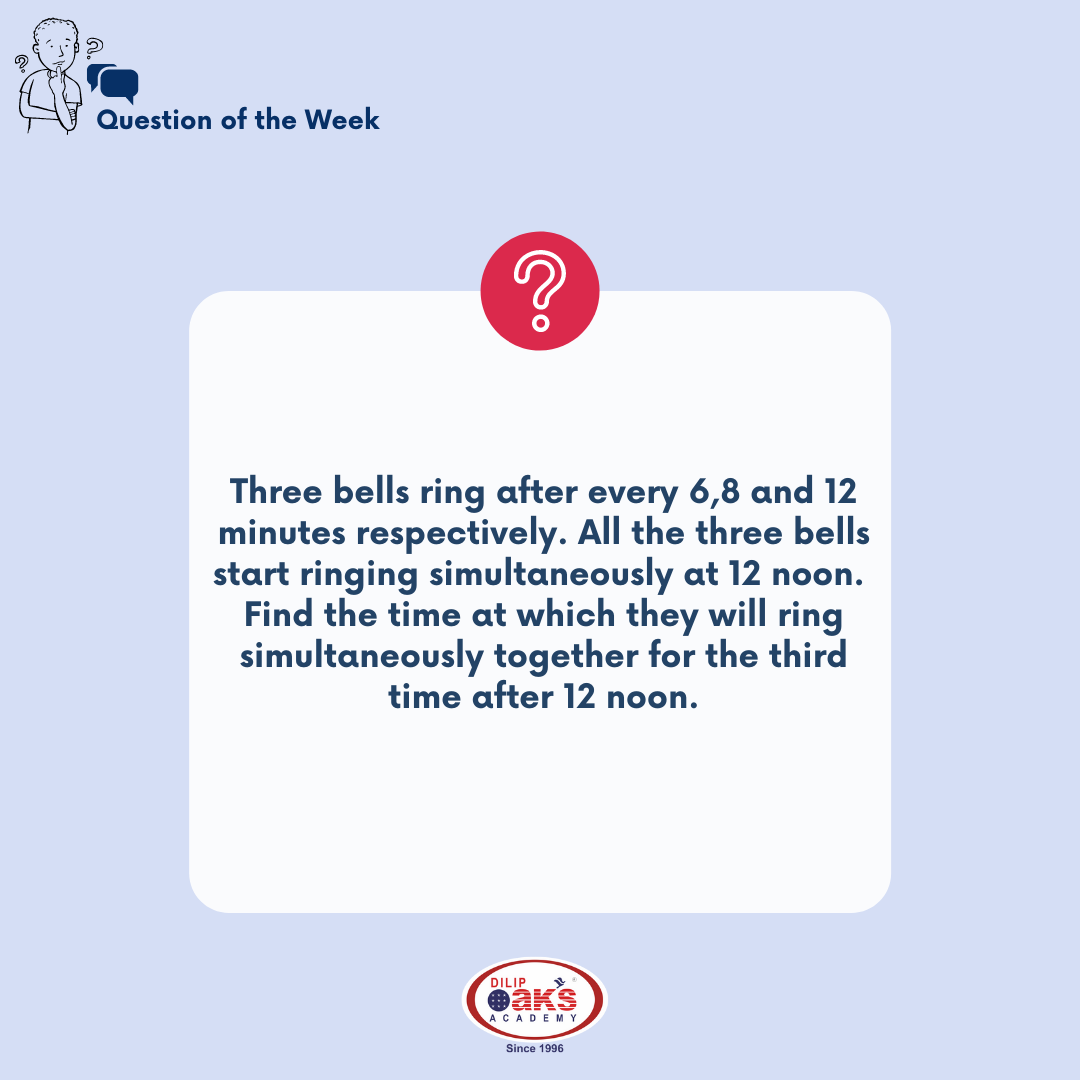
We will publish the correct answers and explanations in the comments section every Friday! STAY TUNED!

Along with the standardized tests like SAT and ACT, we often suggest students aspiring to pursue a bachelor’s degree in America, to take the Advanced Placement (AP) Test.
AP Exams are standardized college-level exams designed to measure your mastery over a specific subject and help you earn credits. Under this, there are 38 courses from various disciplines to choose from like AP Calculus AB, AP Computer Science, AP Chemistry, AP Physics etc. You can choose the course for subjects related to your career of choice and your expertise. AP exams are scored on the scale of 1 to 5, where each score corresponds to a college course grade equivalent.
Taking AP exams has several benefits, especially for Indian students:
Boosts chances of getting into a top-ranked university: AP scores add weightage to your college application and help you stand out among hundred others. Top-ranked universities prefer students who give AP exams because performance in AP demonstrates your thoroughness in the subject and ability to manage university-level studies.
Reduces tuition cost: Taking AP exams helps you to earn college credits even before starting with the college. A high AP score of 4 or 5 allows you to earn enough credits so as to skip a semester or even a year. In that case, you can graduate almost 6 months to 1 year early and save on your tuition fees by thousands of dollars.
Scholarships and funding opportunities: Most US universities offer good scholarships to high AP scores. This enables the student to further save up on the tuition cost. Some universities also offer an Advanced Placement International Diploma (APID) to Indian students who score exceptionally well in more than 5 AP exams. Hence, even if you have a humble financial background, your AP score can help you complete your bachelors in a high ranked university at a relatively low cost.
When to take the AP?
The ideal time to give the AP is in your 11th or 12th grade, depending on the number of exams you want to take and your level of preparation.
The exam is held only once a year, in the month of May. For 2022, the AP exam dates are May 2-6 and May 9-13. The first window for registration was between September and mid-November 2021. However, some test centers are offering a second registration window (February to mid-March) at an additional fee (Pune center last registration date is 6th March 2022)
For more details on AP exam in India and other registration details, visit https://international.collegeboard.org/students/ap/taking-ap-india

If you are a GRE aspirant and you have just begun your prep, the GRE Vocabulary section might seem to be an impossible task, mainly because you are expected to master words which you barely use in your everyday conversations. It is certainly a daunting challenge. But if you start systematically, you can learn over a 1000 GRE words comfortably! How? By keeping in mind the following five tips:
1) Start from Day 1 of your prep
If you are planning to take the GRE after three months, start your prep today! Keeping the vocabulary section for the last few days before the exam is a grave mistake that many students make. It becomes cumbersome to learn and retain so many words in a short span and you end up making silly mistakes. So start learning at least 5 new words right from day one of your prep so that you get ample time to practice and master them.
2) Don’t learn too many words at once
Start slow, be steady. Instead of learning 20 words in a day, learn only five words and gradually increase the count once you gain confidence and are able to retain the words.
3) Learn through discussions and associations
Instead of just mugging up, try to associate the words with images, references and situations, create stories around words, and discuss them with your peers or friends. Practicing this way makes it easier to remember words without getting stressed or confused.
4) Finish learning all the words at least 15 days before the exam
Make sure that you do not keep anything till the last minute and you finish learning words at least fifteen days before the exam and only keep practicing words after that.
5) Revise regularly
Make sure to revise words regularly. Consistency and practice play a huge role in mastering GRE vocabulary. Every week, revise all the words you learnt and keep practicing diligently!
To know more interesting tricks and tips on learning vocabulary, attend our free webinar “Vocab Sunday” on 6th March, 09:30 am and interact directly with our faculty! Register here: https://zoom.us/webinar/register/WN_i-L1JaW8QPSSFKSphog02g

Q.1 What is an form I-20 and how do I obtain it?
The Form I-20 is an official US Government form, issued by a certified school, which a prospective non-immigrant student must have in order to get an F-1 or M-1 visa. Form I-20 acts as proof-of-acceptance and contains the information necessary to pay the SEVIS I-901 fee, apply for a visa, or change visa status, and be admitted into the United States. The Form I-20 has the student’s SEVIS identification number, which starts with the letter N followed by 10 digits, on the top left-hand side.
Q.2 How early should I apply for my student (F1) visa?
You are encouraged to apply for your nonimmigrant student visa as soon as you have your I-20. To ensure you get an early and timely date you may apply at anytime. However, a student visa may be issued no more than 120 days prior to the start date mentioned on your I-20.
Q.3 I received my visa, when should I travel?
You may only enter the United States within 30 days of the beginning of the course of study stated on your I-20 form, regardless of when your visa was issued.
Q.4 What if I receive the I-20 form to a different school?
If you receive an I-20 form after scheduling your appointment, then you can inform the US consular officer of the new I-20 form at the time of the interview.
Q.5 I was working on an H-1B visa and have now been admitted to a university as an F-1. Do I need to return to my country to apply for a student visa?
No. Once you are in the United States, you do not need to apply for a new visa because the visa is only for entry into the United States. Check with USCIS to determine if you need to adjust the status of your existing visa. If you leave the country, however, you’ll need to apply for the student visa in order to re-enter the United States.
Q.6 What is the SEVIS system and how does it affect me?
The Student and Exchange Visitor Information System (SEVIS) program requires schools and exchange programs to verify the enrolment status of all new and continuing foreign students and exchange visitors. Student visa applicants are required to pay a SEVIS fee before a visa can be issued. Applicants are then required to provide the SEVIS I-901 fee receipt as proof of payment. The SEVIS website has more details on this.
Q.7 Can an F-1 student work in the United States?
Full-time students on F visas may seek on-campus employment not to exceed 20 hours per week. After the first year in student status, an applicant may apply for employment off campus with authorization from USCIS.
Q.8 Can my dependents apply for a tourist visa instead of dependent visa if they only want to visit me and stay in U.S. for a short period of time?
Yes, they can apply for a Tourist visa.
Q.9 How do I read and understand my visa?
As soon as you receive your visa, check to make sure all your personal information printed on the visa is correct. If any of the information on your visa does not match the information in your passport, or is otherwise incorrect, please contact the issuing authority (i.e. the US Embassy) immediately.
The expiry date of your visa is the last day you may use the visa to enter the United States. It does not indicate how long you may stay in the United States. Your stay is determined by the Department of Homeland Security at your port of entry. As long as you comply with the Department of Homeland Security decision on the conditions of your stay, you should have no problem. Further information about interpreting your visa can be found at the Department of State’s Consular Affairs website.
Q.10 My visa will expire while I am in the United States. Is there a problem with that?
No. You may stay in the US for the period of time and conditions authorised by the Department of Homeland Security officer when you arrived in the US, which will be noted on the I-94, even if your visa expires during your stay.
Q.11 What address should I mention on Form DS-160, if my current home address and my address on the passport is not the same?
You must mention your current home address in India and not the address printed on your passport.
Q.12 What if I receive an I-20 from a better university after getting the F1 visa?
If you have obtained your visa and need to change the name of the university on your visa, you have to go through the complete process once again by scheduling a new appointment after paying the application fee and service charges.
Q.13 Is there a quota for the number of student visas issued each year?
No. All qualified students receive visas.
For detailed guidance, avail of our visa counselling services by attending our Visa workshop webinar on 27th February at 9:00 am.
If you are not already an Admission Counselling student at the academy, register for the webinar here: https://rzp.io/l/YoS0BjR3
Once you pay and enroll, you will receive the zoom registration link shortly.